What Is Contest Marketing? How to Turn Giveaways Into Real Growth
 Stacey Corrin
Stacey Corrin
Stacey Corrin
 John Turner
John Turner
John Turner
TL;DR: Contest Marketing
Contest marketing uses online giveaways, sweepstakes, and competitions to grow your audience and turn attention into leads or sales.
- Start with one goal: Decide whether you want email subscribers, social followers, or product buzz before you build anything.
- Pick a prize your buyer wants: A prize tied to your brand attracts real leads, not freebie hunters chasing generic cash.
- Use a proper contest tool: A plugin like RafflePress handles entries, rules, and winner selection in one place.
- Make it findable and shareable: A dedicated landing page and a little contest SEO keep it working long after it ends.
- Measure and follow up: Track entries, subscribers, and referrals, then use what you learn on the next one.
When I first heard the phrase “contest marketing,” I assumed it was just a fancy way of saying giveaway. Then I started treating contests as an actual part of a marketing plan, not a one-off, and the difference was obvious.
A giveaway ends when you pick a winner. A contest built around a goal keeps paying you back in subscribers, content, and search traffic for months.
In this guide, I’ll walk you through how contest marketing works, the campaigns worth copying, and how to plan, build, promote, and measure one so it actually grows your business.
- What Is Contest Marketing?
- Types of Online Contests, and When to Use Each
- Contest Marketing Examples Worth Studying
- How to Plan a Contest Marketing Campaign
- How to Build Your Contest
- How to Make Your Contest Findable on Google
- How to Promote Your Contest
- What to Do After Your Contest Ends
- How RafflePress Makes Contest Marketing Easier
- Frequently Asked Questions About Contest Marketing
What Is Contest Marketing?
Contest marketing is a strategy that uses online contests, giveaways, and sweepstakes to attract attention and turn it into leads or sales. For instance it lets you trade a prize for an email address, a follow, a photo submission, or a share, then keep marketing to everyone who entered.
Think of it as renting attention you get to keep. Paid ads stop the moment your budget runs out. A contest leaves you with a list of people who raised their hand and said they’re interested.
That’s why the honest answer to “are giveaways actually good marketing?” is yes, when the prize and the goal match. A well-run contest does a few things a normal post can’t:
- Build your email list fast. KnivesShipFree ran a giveaway that added over 5,000 subscribers in three months and drove over $10,000 in sales.
- Grow your social following. Entry actions like “follow” and “visit our page” turn one prize into hundreds of new followers who chose to be there.
- Get people talking about your product. A branded hashtag or submission requirement spreads your name to every entrant’s audience, not just yours.
- Drive real traffic to your site. One OptinMonster giveaway sent over 3,500 new users to their website, people they could then market to properly.
- Keep existing fans engaged. A contest gives loyal followers a reason to interact again, which most feeds reward with more reach.
The catch is honest too. A badly targeted prize pulls in people who only want free stuff and vanish the day you announce a winner. The fix is entirely in your control, and it starts with the goal and the prize.
Types of Online Contests, and When to Use Each
Not every contest works the same way, and picking the wrong format quietly caps your results. These are the four you’ll actually use.
| Contest type | How it works | Best for |
|---|---|---|
| Giveaway | A random winner receives a prize | Growing email lists and social followers quickly |
| Sweepstakes | A chance-based contest that requires no purchase to enter (the term that matters for compliance) | Running a compliant prize draw at any scale |
| UGC contest | Winners are chosen from submissions like photos, videos, or captions | Collecting brand content and boosting engagement |
| Trivia or quiz contest | Entrants answer a question to win | Teaching your audience something while they play |
Match the format to the goal. Want leads? A giveaway is your best bet. Want a library of customer content? Run a UGC contest instead.
Free: Download Our Giveaway Playbook
Templates, prize ideas, and promotion strategies in one guide.
Contest Marketing Examples Worth Studying
The best way to understand contest marketing is to look at campaigns that got the prize and the mechanic right. Here are three, at very different scales, that each teach one thing.
RafflePress + Agile Marketing: 52% Email List Growth
Agile Marketing Agency ran a contest with RafflePress and grew a client’s email list by 52%. The prize was chosen for that specific audience, not a generic gift card.
They used the viral refer-a-friend entry action to spread the contest without spending on ads. The result was a list of qualified leads who already cared about the brand.
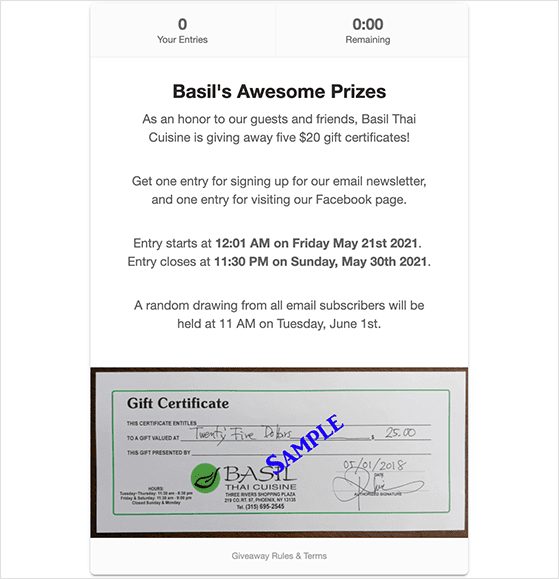
The full Agile Marketing case study has the breakdown.
GoPro: Million Dollar Challenge
GoPro’s annual Million Dollar Challenge asks users to submit footage filmed on a GoPro. One year it collected 42,446 clips from 126 countries.
The prize was cash plus a spot in a GoPro film, and the entry requirement filtered out anyone who didn’t own the product. GoPro ended up with tens of thousands of branded clips it didn’t have to film itself.
Lay’s: Do Us a Flavor
Lay’s invited fans to submit new chip flavor ideas for a cash prize. The campaign pulled in millions of submissions and a wave of social sharing.
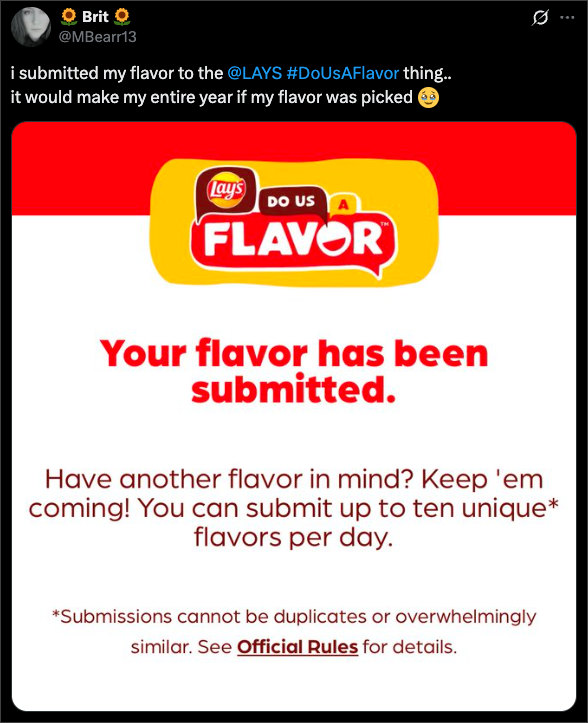
Every entry came from someone who buys the product, which turned the contest into free product research. It grew the brand and crowdsourced the next flavor from the exact people who’d buy it.
How to Plan a Contest Marketing Campaign
Planning matters as much as running the contest. This is where you set the goal, pick the audience and prize, and sort the rules, so the live campaign runs itself. Start with the goal, because everything else follows from it.
Set One Clear, Measurable Goal First
Before you touch a prize or a tool, decide what a win looks like. A vague goal like “get more exposure” gives you nothing to measure and no way to tell if the contest worked.
The fix is to write the goal as a SMART goal: specific, measurable, achievable, relevant, and time-bound. It sounds formal, but it just forces you to name the number and the deadline.
| SMART element | What it means for a contest | Example |
|---|---|---|
| Specific | Name the one outcome you want | Grow the email list |
| Measurable | Attach a number | Add 500 subscribers |
| Achievable | Keep it realistic for your reach | Roughly 20 to 30% over your usual monthly growth |
| Relevant | Tie it to a business need | Feed a product launch next month |
| Time-bound | Set a start and end date | Over a two-week run |
Put together, that’s one sentence: “Add 500 email subscribers over a two-week giveaway to warm up my list before launch.” Now you have something to aim at and measure against.
Your goal also decides the type of contest and the entry actions you use. Here’s how the common goals map.
| Your goal | Best contest type | Main entry action |
|---|---|---|
| Grow your email list | Giveaway | Join the newsletter |
| Grow social followers | Giveaway | Follow or visit a page |
| Collect content | UGC contest | Submit a photo or video |
| Boost product sales | Product giveaway | Refer a friend, visit the shop |
One note on “achievable.” If you normally add 100 subscribers a month, aiming for 1,000 from a single contest will just leave you disappointed. A lift of 20 to 30% over your usual pace is a strong, realistic target for a first run.
Most contests run best over two to four weeks. Shorter than a week and you cut off word of mouth before it starts. Longer than a month and people assume they have plenty of time, so they forget to enter.
Define Your Audience, Not Just Anyone
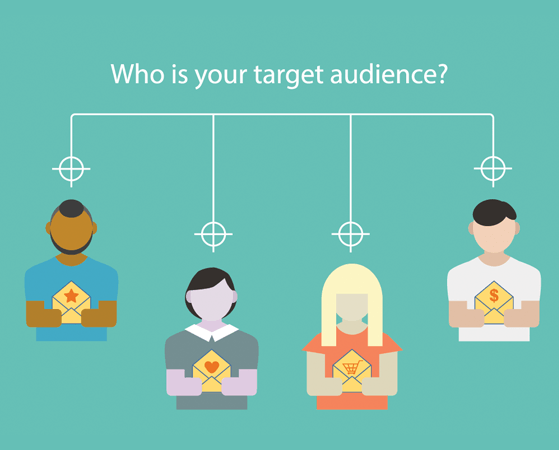
Once the goal is set, get specific about who you’re trying to reach. It’s tempting to open a contest to everyone, but leads who don’t fit your brand are close to worthless.
People who only want the prize enter, grab their entry, and leave the moment you announce a winner. They inflate your numbers and your costs without ever buying anything.
Instead, sketch a quick picture of your ideal entrant:
- What interests, likes, and dislikes do they have?
- Which social platforms do they actually use?
- Which brands do they already follow?
Marketers call this a buyer persona, and it’s worth ten minutes before you pick a prize. OptinMonster has a solid guide on creating a buyer persona if you want a template.
Choose a Prize Your Ideal Customer Actually Wants
The prize is the single biggest lever on who enters. Pick something your target audience genuinely wants, and only them.
A relevant prize also gets people to willingly share what they care about and how to reach them. That’s worth far more than raw entry numbers now that tracking cookies are disappearing. Generic cash pulls in freebie hunters; a prize tied to your niche pulls in buyers.
Ask three questions before you decide:
- What gets your target audience excited?
- What would they happily share with friends?
- Is the prize clearly relevant to your brand?
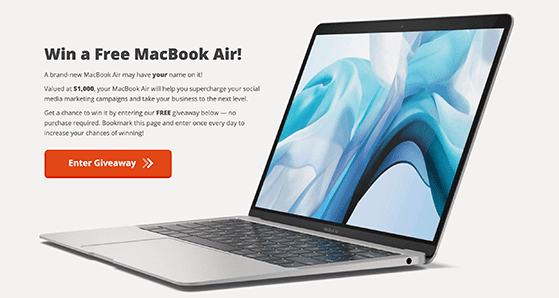
Smash Balloon gave away a MacBook Air for Black Friday, a high-value prize their audience wanted and one that fit their brand. If you’re stuck, here’s a list of giveaway prize ideas that attract real interest.
Know the Rules and Legal Requirements
Before you launch, check the platform rules and the basic legal side. Getting this wrong can suspend your account or create liability you didn’t expect.
- Facebook: prohibits like-and-share entries.
- Most platforms: require a disclosure that they’re not affiliated with your giveaway.
- FTC compliance: needs a no-purchase-necessary clause and official rules explaining how the winner is chosen.
I’d start with RafflePress’s built-in rules generator, then get a legal review for higher-value prizes. For the full walkthrough, see how to write giveaway rules.
How to Build Your Contest
With the plan set, this is where you put the contest together, set the entry methods, and publish it. The right tool makes the whole thing take minutes instead of days.
Use a Proper Contest Tool
A good contest tool handles entries, rules, and winner selection so you don’t have to wire any of it together yourself. Many options exist, but a lot of them have a steep learning curve or fight with your website.
For WordPress, RafflePress is the one I reach for.
RafflePress is a WordPress giveaway plugin that lets you build, run, and manage online contests without touching code. Over 13 years of testing WordPress plugins, I’ve tried a lot of giveaway tools, and it’s the only one that consistently launches a contest fast without breaking my site.
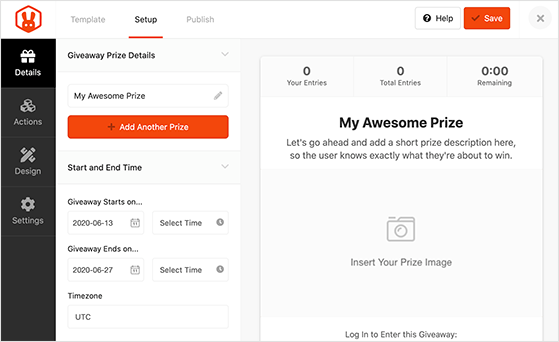
You start from a premade giveaway template built around a goal, then customize it in a drag-and-drop builder.
Templates include growing your email list, growing a Facebook page, growing YouTube subscribers, a viral refer-a-friend campaign, and a pre-launch campaign, among others.
Make Entering Take One Click
No one wants to jump through hoops to enter a giveaway. Online attention is short, so the easier you make entry, the more people follow through.
RafflePress offers one-click entry actions that each map to a popular goal, and every action a person takes gives them another chance to win. Common ones include:
- Follow and share on social media
- Join an email newsletter
- Subscribe to a podcast or RSS feed
- Submit a photo
- Answer a question or complete a poll
- Refer a friend
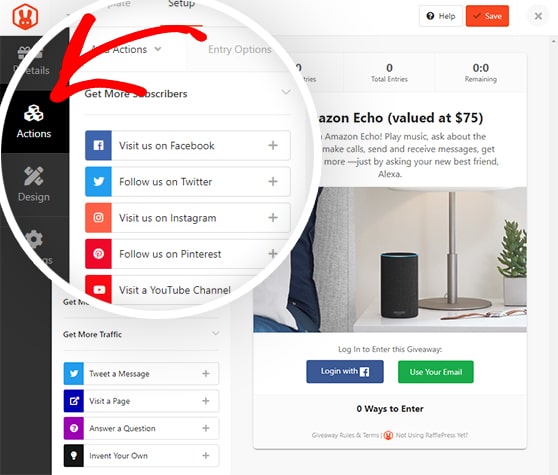
WPForms used this to grow a Facebook group, choosing the “visit a Facebook page” action, and picked up over 11,000 new group members.
Display Crystal-Clear Contest Rules
Every contest needs a clear set of rules. They tell entrants exactly what to do to qualify, and they weed out time-wasters so you attract better leads.
At a minimum, spell out:
- Minimum age requirements
- The locations your giveaway covers
- How to enter
- The end date and time
- How you’ll pick the winner
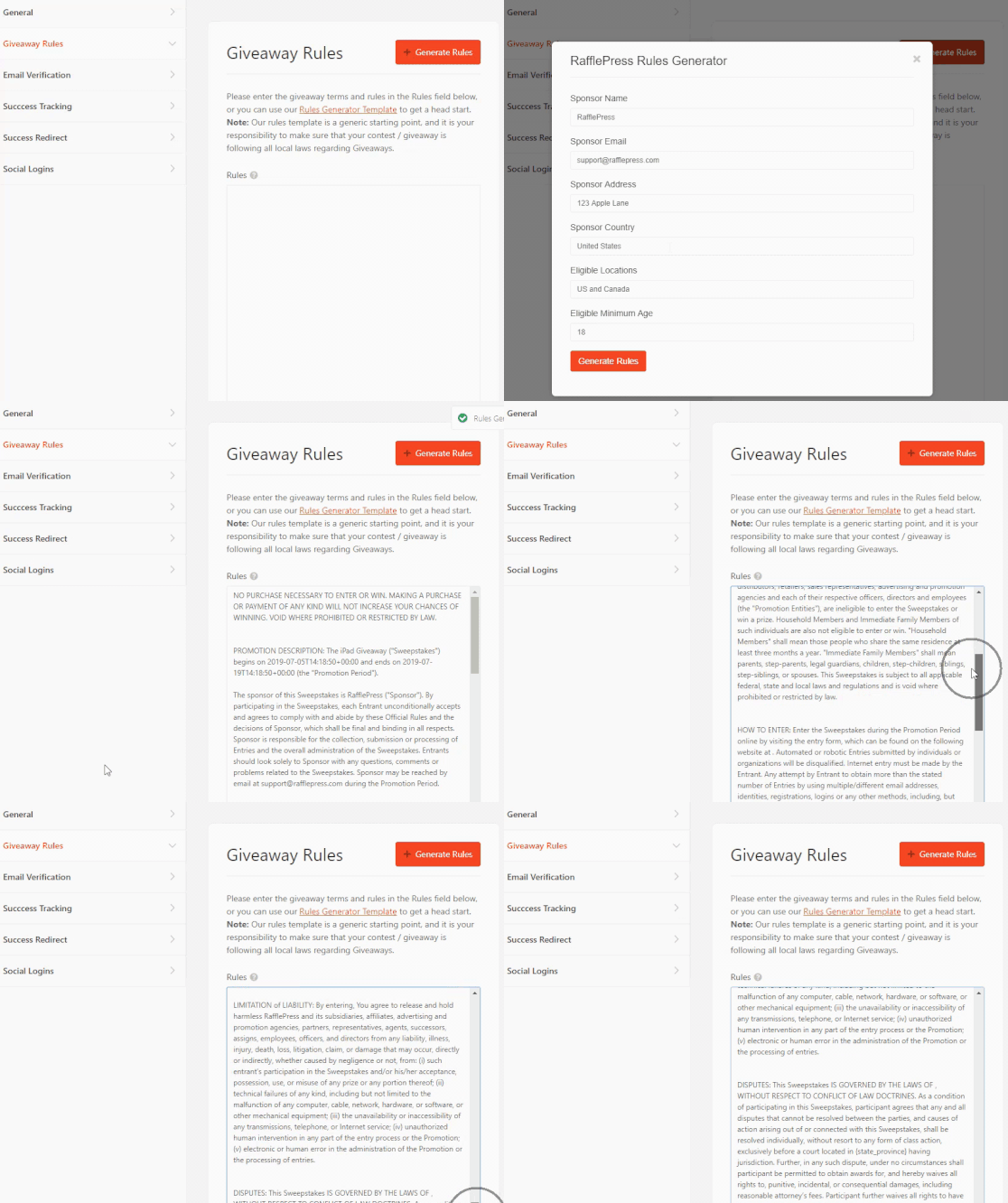
RafflePress has a built-in rules generator: answer a few questions and it writes the official rules for you. You can then edit them and display them right inside the contest, where entrants read them before they join.
Create a Contest Landing Page
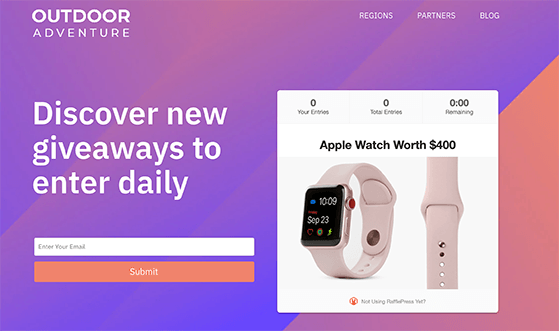
To make an impact from day one, publish your contest on a distraction-free page that’s easy to share. A dedicated giveaway landing page focuses visitors on one action: entering.
You can publish the RafflePress widget on its built-in landing page in a couple of clicks. Or, for more control, build a custom page with SeedProd, a WordPress website and landing page builder that integrates directly with RafflePress.
A custom landing page lets you add the elements that lift entries, including:
- Reviews and testimonials for social proof
- A countdown timer to create urgency
- Images and video to boost engagement
- Optin forms to capture emails
How to Make Your Contest Findable on Google
Most contest guides stop at promotion, but a contest hosted on your own site can rank in search and keep sending you entrants long after you’ve promoted it everywhere else. That’s contest SEO, and it’s what turns a two-week campaign into an evergreen traffic source.
Contest SEO is the practice of optimizing your contest page so it ranks in search results and keeps attracting entrants over time. It works because a good contest earns the exact signals Google rewards: attention, backlinks, social shares, and user-generated content.
A few steps make a real difference:
- Host it on your own site: A contest on a third-party platform builds their SEO, not yours. Your own landing page keeps the traffic and the ranking.
- Target a specific keyword: Pick a long-tail phrase your audience would search, like “contest for dog owners,” rather than a generic “giveaway.”
- Optimize the landing page: Use the keyword in the page title, headings, and description, and write a real introduction rather than dropping in a bare entry widget.
- Choose an evergreen prize: A prize tied to a topic people search year-round keeps the page relevant, so it can rank long after the contest ends.
To keep the SEO benefit going, partner with an influencer or two for backlinks, and repurpose the content entrants submit into fresh posts.
Track how the page performs with a tool like MonsterInsights, which shows your Google Analytics data right inside WordPress.
How to Promote Your Contest
A contest won’t market itself, no matter how good the prize is. Plan to promote it before, during, and after the run so you build momentum early and keep it going.
For a full cross-channel system with a promotion timeline and platform-specific tips, see our guide on how to promote your contest on multiple platforms. Here are the channels that do the heavy lifting.
Announce It to Your Email List
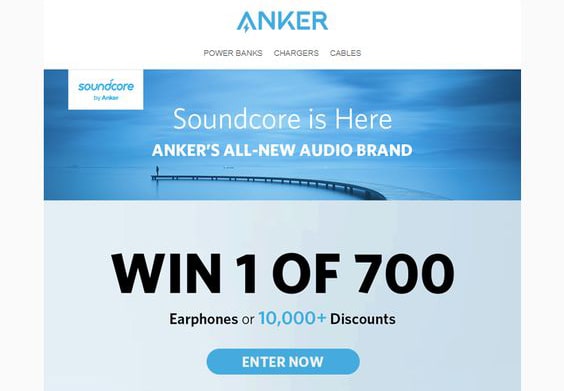
Your email list is the warmest audience you have. These people already chose to hear from you, so they’re the most likely to enter and to share.
Send an announcement the moment the contest goes live, and ask subscribers to pass it to a friend. A single email to an engaged list often out-performs every social channel combined.
Send Push Notification Reminders
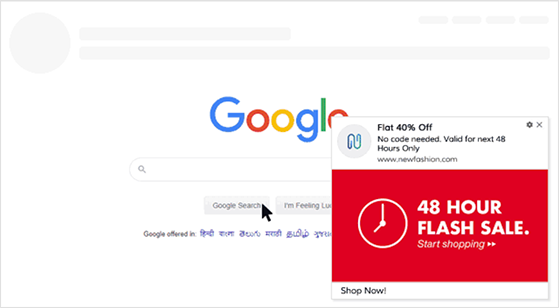
Push notifications reach people after they’ve left your site, right in their browser. They’re ideal for the three moments that matter: launch, mid-contest momentum, and the last-chance reminder before entries close.
I’ve leaned on PushEngage for those last-minute reminders during time-limited contests. It sets up without code and handles segmentation and scheduling for you.
Promote It Across Social Media
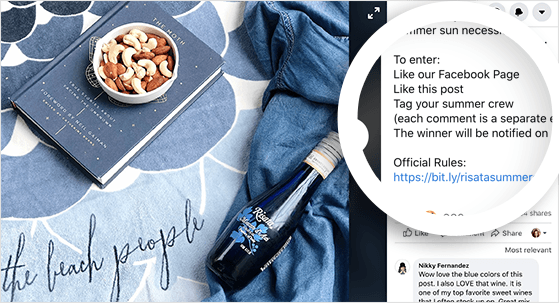
Social is where contests spread, so match the content to the platform. A short teaser video tends to land on Facebook, while a step-by-step graphic gets more clicks on Pinterest.
Design the campaign to run before, during, and after the contest. Teasers build anticipation, mid-run posts keep it visible, and a winner announcement gives you one more reason to post.
Tap Influencers for Reach and Links
Influencers already have the audience you’re trying to reach, and a shout-out from the right one puts your contest in front of thousands of relevant people at once.
Start by finding influencers whose audience matches your buyer persona, not just anyone with a big following. A genuine fit brings entrants who might actually buy from you, plus the occasional backlink that helps your contest SEO.
What to Do After Your Contest Ends
The work isn’t over when you pick a winner. What you do in the days after decides whether the contest was a one-time spike or the start of a relationship, and whether your next one is better.
Follow Up With Everyone Who Entered
Announce the winner publicly, on the same channels where you promoted the contest. It proves the giveaway was real and gives you one more high-engagement post. If you need a fair way to do it, here’s how to pick a winner for a giveaway.
Then do something with the people who didn’t win, which is almost everyone. A “thanks for entering, here’s 10% off” email turns a lost entrant into a first-time customer while your brand is still fresh in their mind.
Measure the Results That Matter
You set a goal at the start, so now you check it. Tracking the right numbers tells you whether the contest worked and what to change next time.
These are the metrics worth watching:
| Metric | What it tells you |
|---|---|
| Total entries | Overall reach and interest |
| New email subscribers | List growth, usually the main goal |
| Website traffic | How many people the contest sent to your site |
| Social engagement | Follows, shares, and comments earned |
| Referral shares | How far entrants spread it for you |
| Entry conversion rate | How well your page turned visitors into entrants |
Entry conversion rate is the most useful metric here, and the one most people skip. Divide your number of entries by the number of people who saw the contest page, and you get a clean read on whether the page itself is doing its job.
If you run contests in RafflePress, the built-in Entries Report shows this data in your dashboard, so you’re not stitching it together by hand.
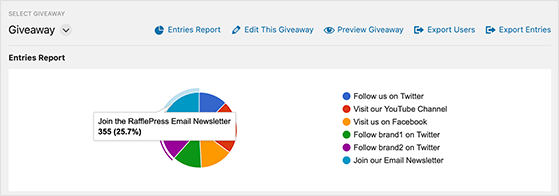
Pay attention to referrals especially: the referral channel converts at nearly four times the average, and referred customers have a 37% higher repeat-purchase rate, according to Viral Loops.
Use What You Learned on the Next One
Finish by turning the data into a plan. A few honest questions sharpen every future campaign:
- Which channel drove the most entries?
- Which entry action did people actually complete?
- Was the prize right, or did it attract the wrong crowd?
Answer those and your next contest starts ahead of this one. That compounding is the whole point of treating contests as marketing rather than a one-off.
How RafflePress Makes Contest Marketing Easier
If you’re running contests on WordPress, RafflePress handles the parts that usually make them a hassle.
It’s the giveaway plugin I use, and it covers the full lifecycle in one place:
- Templates built around goals
- One-click entry actions,
- An automatic rules generator
- A built-in landing page
- Entries Report to measure results
The refer-a-friend action is the piece that does the quiet work. It’s the mechanic behind the 52% list growth in the Agile Marketing campaign, and it’s what turns a normal giveaway into something that spreads on its own.
Over 200,000 WordPress sites run their giveaways with RafflePress, and it holds a 5-star rating on WordPress.org.
Get started with RafflePress and you can have your first contest live before the end of the day.
Frequently Asked Questions About Contest Marketing
Do giveaways actually work for small businesses?
Yes, giveaways work well for small businesses when the prize is targeted. A relevant prize attracts people who fit your niche, so you build a list of potential customers rather than freebie hunters. Real campaigns like KnivesShipFree’s 5,000-subscriber giveaway show the payoff comes from matching the prize to the audience, not from spending the most.
How long should a contest run?
Most contests run best over two to four weeks. Less than a week cuts off word of mouth before it can build, and more than a month makes people feel they have plenty of time, so they forget to enter. Two weeks is a safe default for a first campaign.
How many entries is a good result?
It depends on your reach, so measure against your own baseline rather than a universal number. A useful target is a 20 to 30% lift over your normal monthly growth for that goal. Entry conversion rate matters more than the raw count: a small but engaged contest often beats a large one full of the wrong people.
Do I need special software to run a contest?
You don’t strictly need it, but a contest tool saves hours and prevents mistakes. A plugin like RafflePress manages entries, generates the legal rules, publishes a landing page, and picks the winner fairly. Doing all that manually is where most DIY contests go wrong.
Ready to Run Your First Contest?
Contest marketing stops being a gamble the moment you start with a goal instead of a prize. Name the number you want, pick a prize only your ideal customer would chase, and give the campaign somewhere to live that keeps working after it ends.
That last part is what separated a “giveaway” from “contest marketing” for me in the first place.
- 13 Types of Contests to Grow Your Online Audience
- How to Do a Giveaway to Grow Your Email List
- How to Run an Instagram Giveaway That Gets Real Followers
- How Long Should a Giveaway Last?
If you liked this article, please subscribe to our YouTube Channel for RafflePress video tutorials. You can also find us on Twitter and Facebook.


