Build a Podcast Landing Page in WordPress in Under 30 Minutes
 Stacey Corrin
Stacey Corrin
Stacey Corrin
 John Turner
John Turner
John Turner
TL;DR: Build a Podcast Landing Page in WordPress in 30 Minutes
You can build a podcast landing page in WordPress in under 30 minutes, without a developer, without code, and without a locked-in platform.
- Install SeedProd: Download the plugin, verify your license key, and open the landing pages dashboard.
- Choose a template: Pick a design from the library, name your page, and open the visual editor.
- Customize content: Add your headline, podcast description, show artwork, and platform subscribe buttons. Prioritize YouTube, Spotify, and Apple Podcasts in that order.
- Add a giveaway block: Drop in a RafflePress giveaway with a “Subscribe to Podcast” entry action to incentivize signups with a prize.
- Connect your email list: Link your email marketing tool so every form signup goes straight to your provider.
- Publish and share: Set the page live and add the URL to your episode descriptions, social bios, and newsletter.
Most podcasters I work with run into the same issue. They’re promoting their show everywhere, but they don’t have one clear place to send new listeners. Links get buried in blog posts or scattered across platforms, and that makes it harder for people to subscribe.
I’ve helped clients fix this by building a dedicated podcast landing page. Once it’s in place, they have one URL to share across episode descriptions, social bios, and email newsletters. Their list started growing because every signup goes through one form they actually own, not a third-party platform that can change its algorithm next month.
In this guide, I’ll walk you through how to create a podcast landing page in WordPress. You don’t need to code anything, and you can get the whole thing done in under 30 minutes.
Quick Summary:
- Step 1. Install the SeedProd Plugin
- Step 2. Choose a Landing Page Template
- Step 3. Customize the Page Layout and Content
- Step 4. Add Podcast Links and Email Signup
- Step 5. Connect to Your Email Marketing Tool
- Step 6. Update Your Page Settings
- Step 7. Publish and Share Your Landing Page
- Podcast Landing Page FAQs
What Is a Podcast Landing Page and Why Use One?
A podcast landing page is a focused web page where new listeners can subscribe to your show, sample an episode, and join your email list, all without navigating away to Spotify or Apple Podcasts.
And it matters how quickly people engage. In fact, 71% of weekly podcast listeners tune in within 24 hours of a new episode being released, so having a current, easy-to-navigate page helps you capture that attention right away.
There are several good reasons to build a podcast landing page:
- A landing page can help promote your podcast to a wider audience by showcasing its unique features and the topics you cover.
- By including subscription buttons or links, you can increase subscribers to your podcast and keep them up to date with new episodes.
- You can engage your listeners by providing additional resources and information related to your podcast, including show notes, guest bios, and links to related content.
- With a form or survey, you can collect valuable data from your listeners to better understand your audience and tailor your podcast to their needs.
- You can add a podcast email signup form to collect addresses and build a subscriber list for future episodes, offers, or giveaways.
- Improve podcast discoverability: your landing page gives search engines indexable text (episode titles, descriptions, show notes) that Spotify and Apple Podcasts don’t provide. A page on your own site can rank in Google; your podcast app profile cannot.
Many listeners now tune in on YouTube, which is actually the most popular podcast platform in the U.S.
Around 33% use YouTube to listen, compared to 26% on Spotify and just 14% on Apple Podcasts. Having those links all in one place makes a big difference.
What Should a Podcast Landing Page Include?
Every effective podcast landing page shares a handful of core elements. Here’s what to include:
- Clear and compelling headline: The headline should clearly convey the topic or theme of your podcast and grab the visitor’s attention.
- Brief description: A short description of your podcast that highlights its unique features, benefits, and the problems it solves.
- Eye-catching graphics: Include high-quality visuals that represent your show. If you’re using a visual website builder like SeedProd, it’s easy to add your artwork and logos without coding.
- Player or subscription buttons: Include a subscribe button for each platform you publish to. Research shows YouTube reaches about 33% of U.S. podcast listeners, Spotify 26%, and Apple Podcasts 14%. List your buttons in that order so the most popular platform comes first. An embedded player lets visitors sample your latest episode right from the page.
- Show notes: Detailed notes that provide more information about your podcast, such as guest bios, key takeaways, and links to resources mentioned in the episode.
- Testimonials or reviews: Showcase positive reviews or testimonials from satisfied listeners to build trust and social proof.
- Call to action (CTA): A clear CTA that encourages visitors to subscribe, listen, or take other actions related to your podcast.
- Social media links: Links to your social media profiles so visitors can connect with you and stay up to date with your latest episodes.
- About the host: A short paragraph or photo about who runs the show helps new listeners decide whether it’s for them. First impressions on a landing page often come down to whether the host feels relatable.
One tactic most landing page guides miss: running a giveaway on your page to incentivize subscriptions.
RafflePress has a built-in “Subscribe to Podcast” entry action that awards contest entries for subscribing, turning a passive visit into an active signup. No other standard landing page tool offers this mechanic, and it’s the reason this approach drives more subscribers than a static subscribe button alone.
It’s also worth testing your page on a phone before publishing.
Most podcast listening happens on mobile, so check that subscribe buttons are large enough to tap and that the email form loads correctly on a small screen. SeedProd pages are responsive by default, but a quick review before publishing is always worth it.
Podcast Landing Page Examples
Looking at real podcast landing pages before you build your own is one of the fastest ways to understand what works. Here are three worth studying.
The Friday Habit
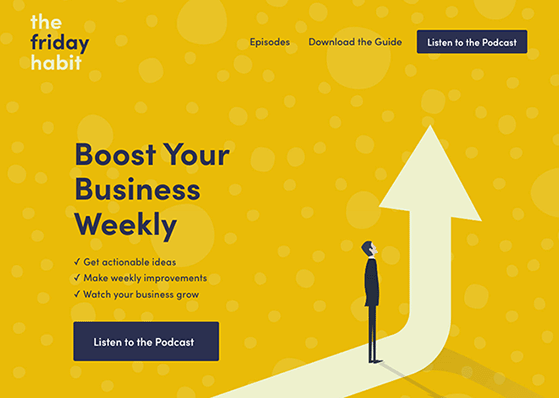
The complete conversion path lands on one screen. Above the fold: a pain-point headline (“Design your creative service business to run itself”), four-problem statement list, platform subscribe buttons, and a lead magnet email form offering a free guide.
The page earns the email ask — visitors are hooked on a specific problem before seeing the form. Testimonials appear mid-page after the hook, not above it.
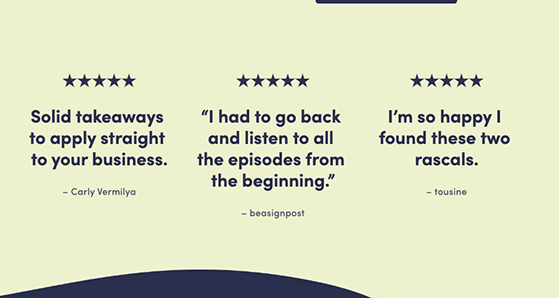
By including a lead magnet, the show collects email addresses from interested visitors. They can send marketing messages directly, rather than relying on platform algorithms to surface new episodes.
Smart Passive Income
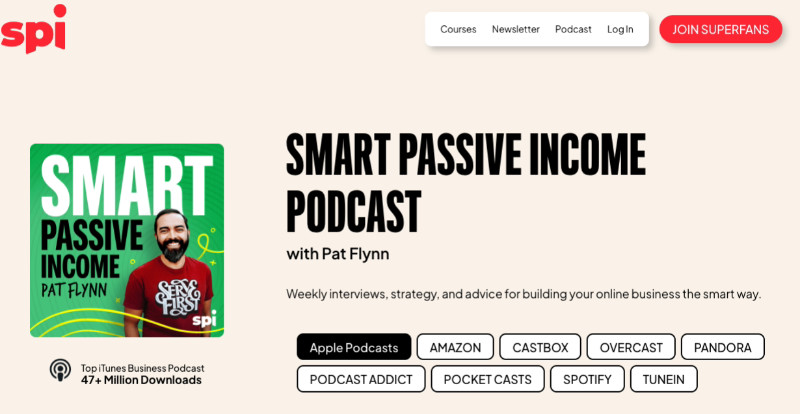
Social proof as the primary conversion lever. Above the fold: podcast artwork, a “Top iTunes Business Podcast” badge, a “47+ Million Downloads” credential, nine platform subscription links, then an email newsletter signup.
The credibility marker converts cold visitors before they’ve heard a single episode. New podcasters won’t have those download numbers yet. A listener quote or a media mention placed near the top does the same job at launch.
The Minimalists
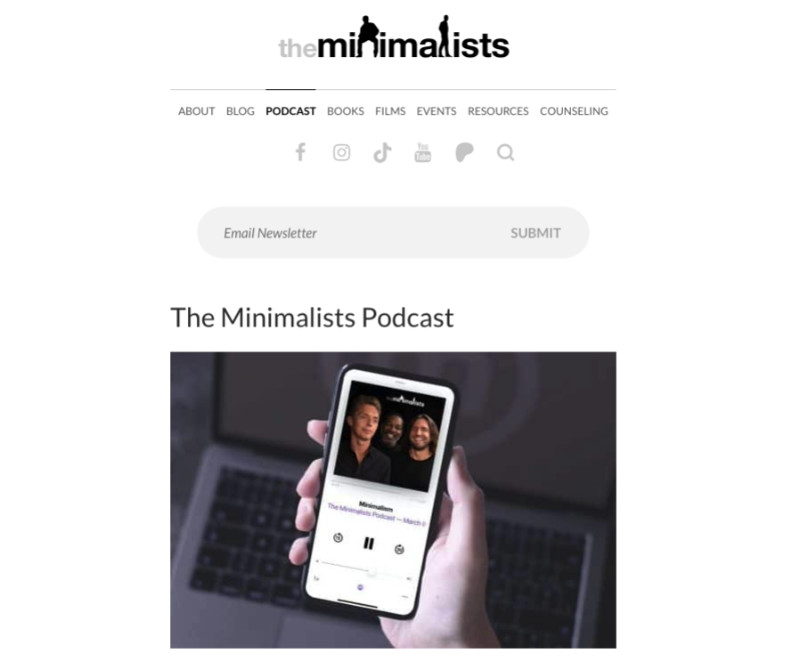
The stripped-back solo approach. Five elements: podcast logo, one-line credibility statement (“more than 200 million downloads”), and three platform buttons. No navigation noise, no sidebar.
Zero friction between landing and subscribing. The notable gap: no email form, so every subscriber lives on someone else’s platform. Add an email signup and this lean layout becomes a strong solo podcaster starting template.
Free: Download Our Giveaway Playbook
Templates, prize ideas, and promotion strategies in one guide.
How to Build a Podcast Landing Page in WordPress
There are many ways to make landing pages. You could use the tools included on your podcast platform, but these often lack the features and flexibility to build the best podcast landing page.
Alternatively, you could use a cloud-based landing page builder. They work well if you don’t have a podcast website, but typically come with a high monthly price tag.
More importantly, you won’t have control over the page. The business platform could go bust, leaving you empty-handed.
The best solution is to build a landing page attached to your existing website. That way, you own all the content and can control important factors including page speed, uptime, and security.
For this, I recommend SeedProd, one of the best WordPress website builders. SeedProd lets you build a professional podcast landing page visually, without touching a line of code.
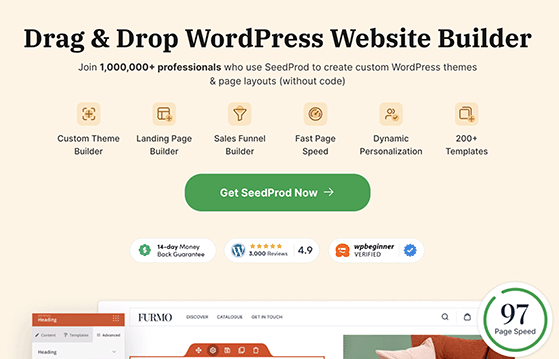
With its professional template library and block-based design system, you can launch a landing page in under 30 minutes.
Follow the steps below to start building your podcast landing page.
Step 1. Install the SeedProd Plugin
The first thing you’ll need to do is download the SeedProd plugin and add it to your WordPress website. If you need help with this, you can follow this tutorial on how to install a WordPress plugin for beginners.
Once the plugin is active on your WordPress site, navigate to the SeedProd » Settings page and enter your license key.
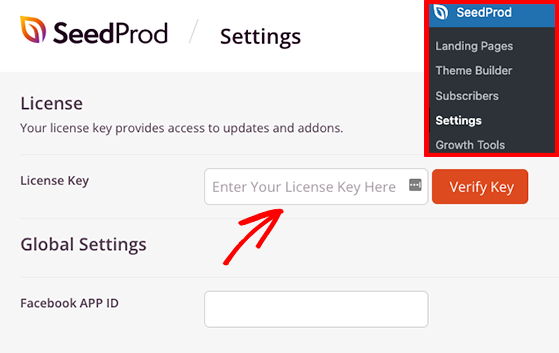
You can find your key on the SeedProd website in your account area under the Downloads section.
Remember to click the Verify Key button to save your changes.
Next, go to SeedProd » Landing Pages, where you’ll see an overview of the landing page dashboard.
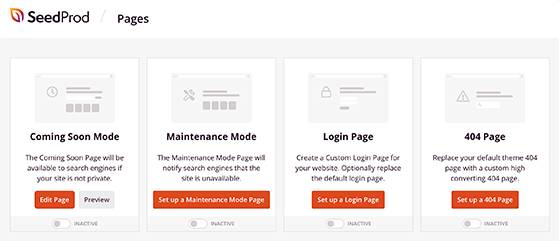
At the top are ready-made pages you can customize and activate, including:
- Coming Soon Mode
- Maintenance Mode
- Login Page
- 404 Page
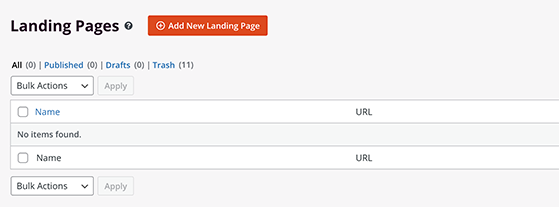
The section we’ll use is for individual landing pages below that. Go ahead and click the Add New Landing Page button.
Step 2. Choose a Landing Page Template
Clicking the Add New Landing Page button opens a library of pre-made landing page templates. You can click any of the filters to narrow down the designs by purpose, such as sales, lead squeeze, or webinar.
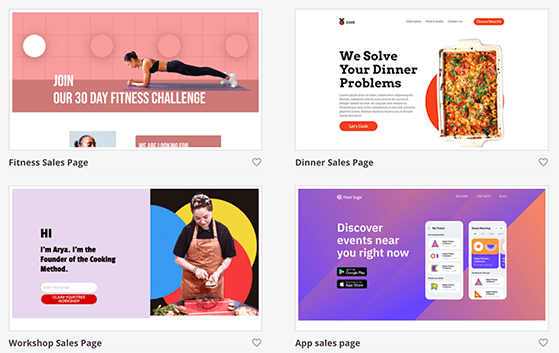
When you find a design close to how you want your page to look, hover over it and click the orange checkmark icon.
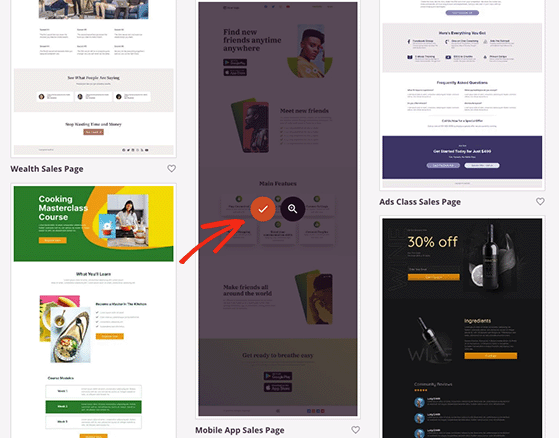
After that, give your new page a name and slug, which is the page’s URL.
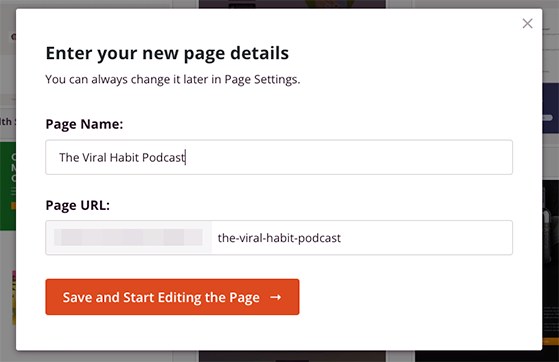
From there, click the Save and Start Editing the Page button to open the landing page builder.
Step 3. Customize the Page Layout and Content
Now you’ll see the template you chose inside SeedProd’s visual editor. It shows a live preview of your page on the right and blocks for customizing the design on the left.
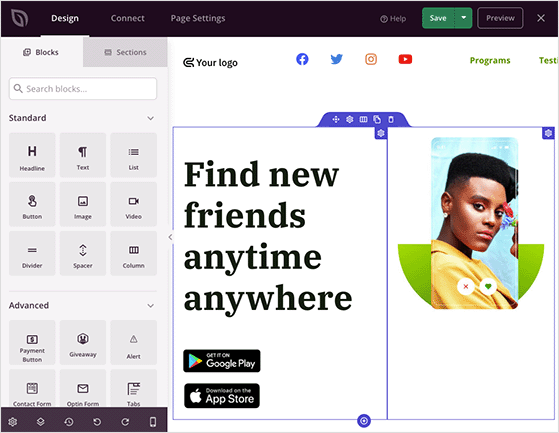
Click anywhere on the preview to start customizing the template to match your podcast’s branding.
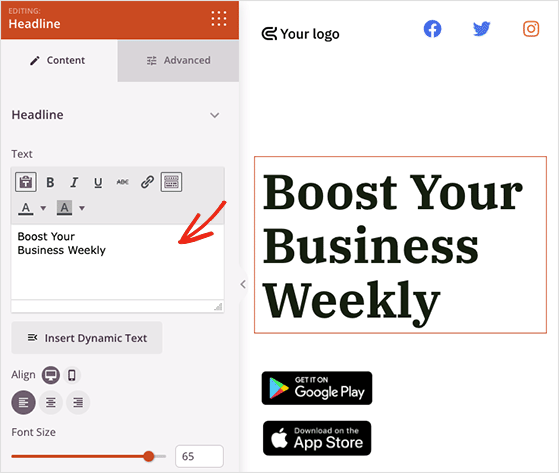
For example, you can click the headline to open its settings panel on the left and add your own headline text describing your podcast.
Similarly, drag any blocks from the left-hand panel onto the page to add new content, like list blocks, buttons, and more.
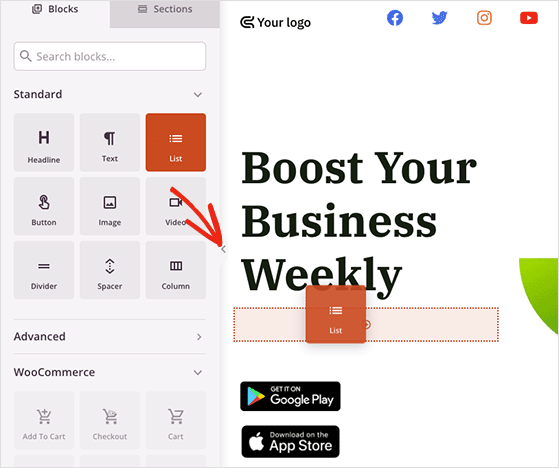
In each block setting, you’ll see several ways to customize that element. For instance, you can add new list items in the Bullet List block, change the bullet icon, and adjust the colors and sizing.
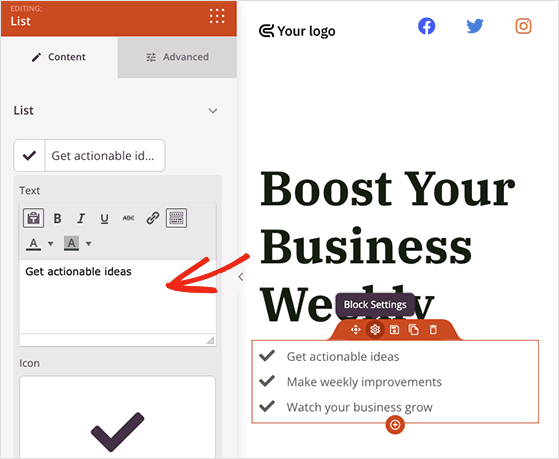
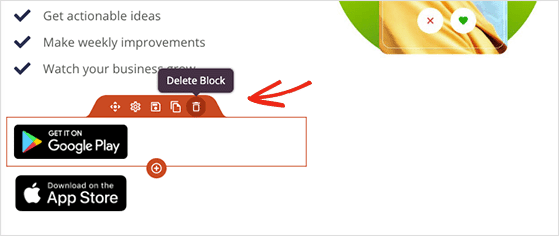
You can also delete unnecessary elements by hovering over them and clicking the trashcan icon.
If the template’s default styling isn’t to your liking, change it all at once by clicking the gear icon in the bottom-left corner.
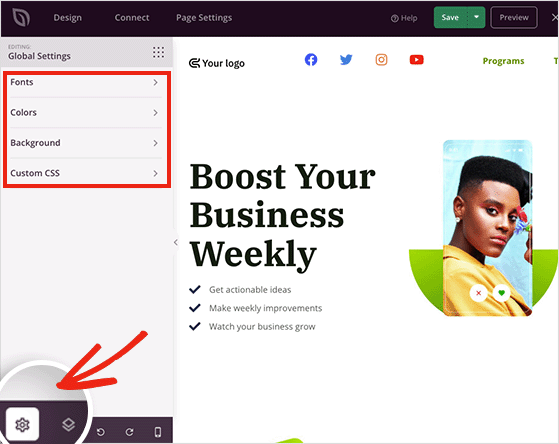
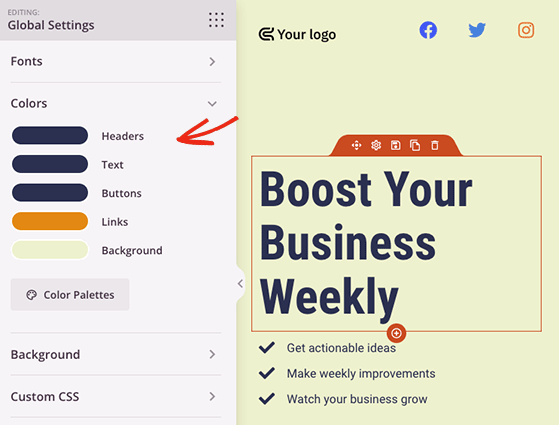
This opens the Global Settings panel, where you can edit the global colors, fonts, backgrounds, and custom CSS.
Some other elements you may want to customize include:
- Your podcast logo
- Header links
- Dividers to make your page more interesting
- Positive reviews and testimonials
- Subscribe button
- Social media links for sites like Facebook, LinkedIn, and YouTube.
Once your page looks like the vision you imagined, you can add other page elements to help you get more podcast subscribers.
Step 4. Add Podcast Links and Email Signup
One of the easiest ways to grow your audience is to add podcast platform links and a podcast email signup form. This helps you collect leads while making it easier for visitors to subscribe.
This is easy to do with SeedProd’s Social Profiles block.
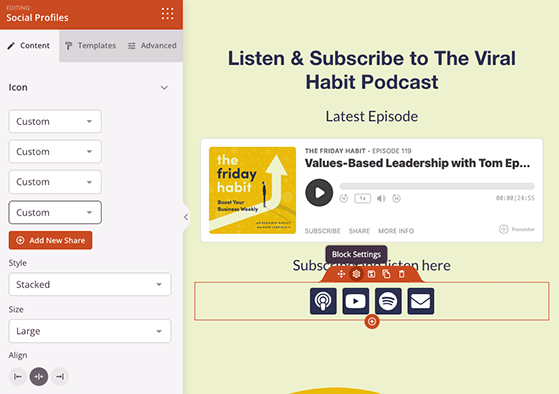
In the block settings, you can choose a custom icon to add links to websites other than social media.
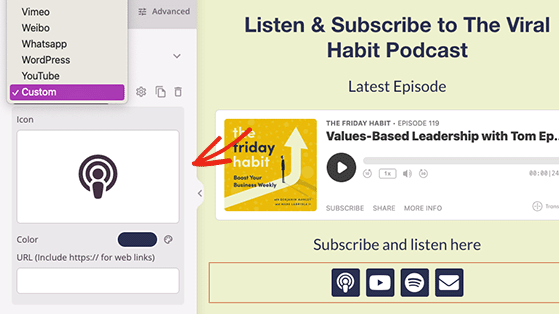
SeedProd also integrates seamlessly with RafflePress, allowing you to add giveaways directly to your landing page with the dedicated RafflePress block.
RafflePress has a built-in “Subscribe to Podcast” entry action that awards contest entries for subscribing, turning your landing page into an active subscriber growth engine instead of a passive link hub. I’ve used this mechanic with clients who were stuck at a few hundred subscribers; the giveaway gave visitors a concrete reason to subscribe right then, rather than saving it for later.
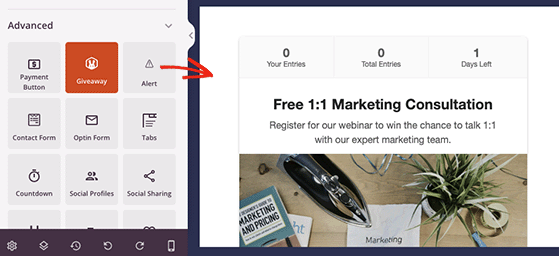
Just drag the block onto your page and choose your RafflePress giveaway from the dropdown menu.
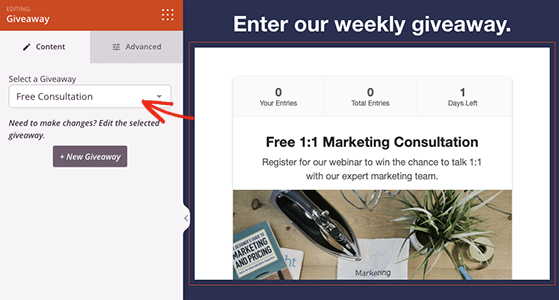
As a result, you can create buzz around your podcast and incentivize users to subscribe, with the chance of winning a prize.
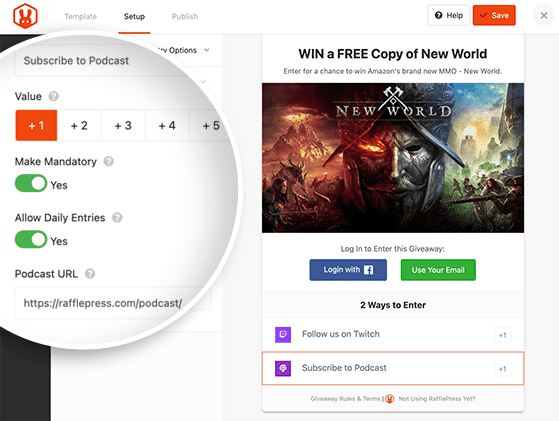
Additionally, you can use the Opt-in Form block to generate leads for your podcast, add the Contact Form block to gather user feedback, or even create urgency for your next episode with the Countdown Timer block.
When you’re finished creating your page, make sure you click the Save button.
Step 5. Connect to Your Email Marketing Tool
If you’re using SeedProd’s Opt-in Form block to generate leads for your podcast, connect your email list next. Connecting takes a few clicks. Once it’s done, every signup on your landing page goes straight to your provider with no manual exporting or copying lists.
To do this, click the Connect tab at the top of the page, find your email provider, and click Connect.
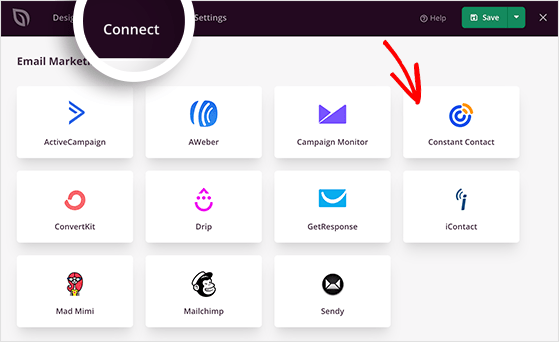
SeedProd will then guide you through authorizing the connection to keep your list updated. This turns your landing page into a real lead magnet for your show and gives you more control over how you promote your podcast online.
Step 6. Update Your Page Settings
Next, click the Page Settings tab to adjust a few more landing page functions.
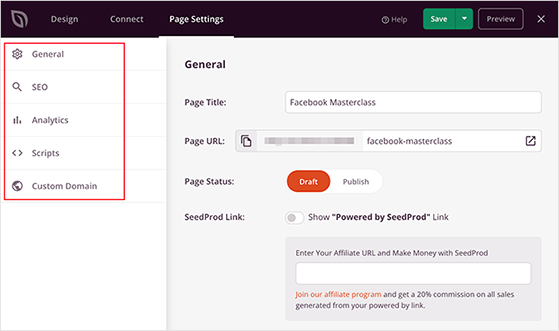
In the General section, you can give your page a new name, URL slug and enter your Facebook App ID.
The SEO tab lets you optimize your landing page for search engines with a WordPress SEO plugin. For this, we recommend using All in One SEO.
Similarly, you can track your landing page performance with MonsterInsights by clicking the Analytics tab.
Beyond that are tabs for adding scripts to your page and giving your landing page a custom domain name. However, the Custom Domain option is only available on Elite plans.
Step 7. Publish and Share Your Landing Page
The final step is to make your page live. Click the Save dropdown button and choose Publish.
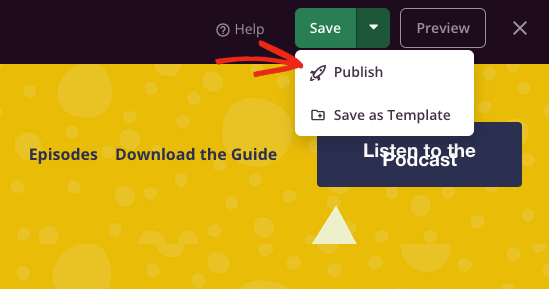
Now you’re ready to visit your landing page to see how it looks!
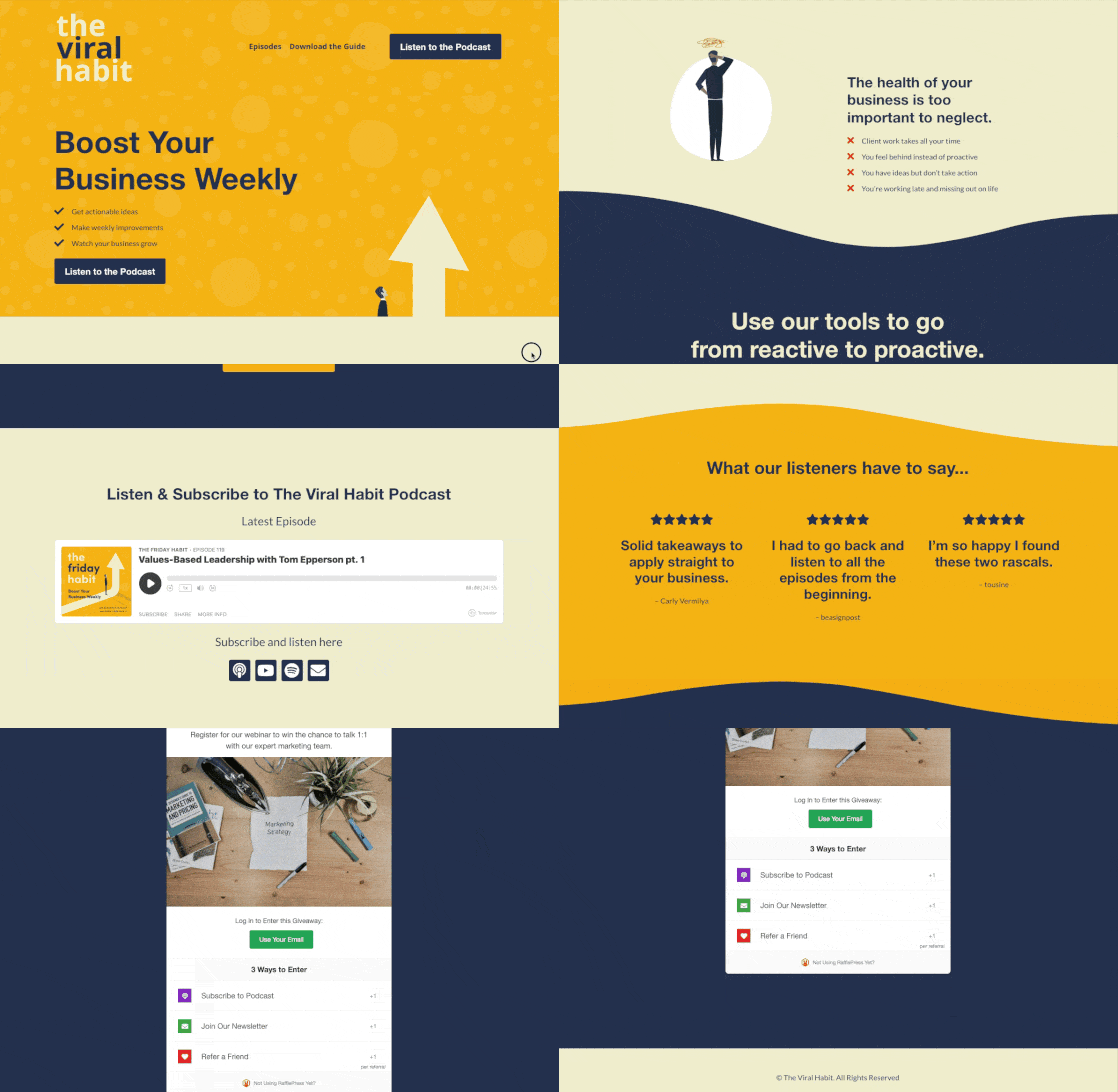
Here’s an example of the podcast landing page we made:
Podcast Landing Page FAQs
What’s the difference between a podcast landing page and a podcast website?
A podcast landing page is a single focused page where visitors can subscribe, sample an episode, and join your email list. A podcast website has multiple pages: episode archives, show notes, a blog, and guest profiles. Start with a landing page if you’re launching or growing; build out a full website once you have consistent listenership and content to support it.
Do I need a podcast landing page if my show is already on Spotify or Apple Podcasts?
Yes. Your Spotify and Apple Podcasts profiles are controlled by those platforms. They can change the interface, limit your visibility, or discontinue features at any time. A landing page on your own site gives you a URL you control, an email list you own, and a page that can rank in Google search results. Podcast app profiles cannot rank in Google.
How do I get more subscribers from my podcast landing page?
Three tactics work reliably: add a lead magnet (a free guide or bonus episode) above the fold to earn the email ask, run a RafflePress giveaway with a “Subscribe to Podcast” entry action to give visitors a specific reason to subscribe now, and place your platform subscribe buttons in platform popularity order: YouTube first, then Spotify, then Apple Podcasts.
Why not just use my homepage to promote my podcast?
Your homepage has too many distractions. A dedicated podcast landing page focuses entirely on getting people to listen, subscribe, or join your email list without competing buttons or menus.
How do I get more people to visit my landing page?
Share the link in your social media bios, email newsletters, and episode descriptions. You can also run a giveaway to bring in new listeners and boost engagement.
That one-URL problem the podcasters I work with always struggle with? You’ve just solved it. The page is live, the subscribe buttons are in the right order, and every email signup goes straight to your list, not to a platform that can change the rules tomorrow.
If you want to take it a step further, get RafflePress and run a giveaway on your landing page. The “Subscribe to Podcast” entry action turns visitors into subscribers with a prize incentive that no standard landing page tool includes.
Before you leave, you might also like this beginner’s guide on how to do a giveaway in WordPress.
If you liked this article, please subscribe to our YouTube Channel for RafflePress video tutorials. You can also find us on Twitter and Facebook.

