How to Create a Poll in WordPress: 3 Easy Ways
 Stacey Corrin
Stacey Corrin
Stacey Corrin
 John Turner
John Turner
John Turner

Want to learn how to create a poll in WordPress?
I’ve added polls to everything from giveaway landing pages to blog sidebars, and they’ve always helped me connect better with my audience. Whether you’re collecting opinions, running a vote, or boosting engagement, adding a poll is one of the simplest ways to make your site more interactive.
In this tutorial, I’ll show you step-by-step how to create a poll in WordPress.
📌 TL;DR: How to Create a Poll in WordPress
Why Do You Need a Poll on Your WordPress Website?
Polls get your website visitors involved with your WordPress site. People who answer questions and share their thoughts feel more connected to you.
But engagement isn’t the only benefit. Polls also give you valuable information about what your visitors are interested in.
You can use this information to improve user experience, design better products, and make smart decisions about your WordPress website.
How to Choose the Right Polling Tool
If you’re a WordPress blogger, polls are a great way to keep your readers involved. They help you collect feedback and even bring more people to your site.
But with so many different tools, how do you decide which one to use?
Here are some things to keep in mind when choosing a WordPress poll plugin:
- Ease of Use: You don’t want a complicated plugin that takes forever to set up. Look for one that’s easy to use and doesn’t require technical skills.
- Customization: It’s great when you can change your polls to match the look of your site. Choose a tool with functionality to change colors, fonts, and other design elements.
- Reports: Your poll is most helpful when you can save and understand the results. Look for a tool that provides detailed information about how people answered, including graphs and charts. Some allow you to embed reports into your dashboard for easy monitoring.
- Mobile-Friendly: Many people use their phones and tablets to browse the web. Make sure your polls look good on all kinds of devices.
- Integrations: Does the tool work with your existing software, like your email list, SEO plugin, or social media? That can help you get the most out of your polls.
- Price and Features: Some tools are free, and others may cost money. Consider how much you can spend and the specific features you need.
Think about these things so you can find the perfect poll maker for your WordPress website. It will help you connect with your audience and improve your content.
Now, let’s look at how to create that new poll. I’ve picked 3 tools with the features I mentioned above and which I’ve used regularly on my personal WordPress websites.
Free: Download Our Giveaway Playbook
Templates, prize ideas, and promotion strategies in one guide.
How to Create a Poll in WordPress Using RafflePress
Takeaway: RafflePress is perfect if you want to boost poll responses by offering prizes. You can run a poll as part of a giveaway to drive traffic, get feedback, and grow your email list at the same time.
For the first method, I’m using RafflePress, one of the best WordPress giveaway plugins. With its drag-and-drop builder, you can grow your email list, social media followers, and website traffic with viral giveaway contests.
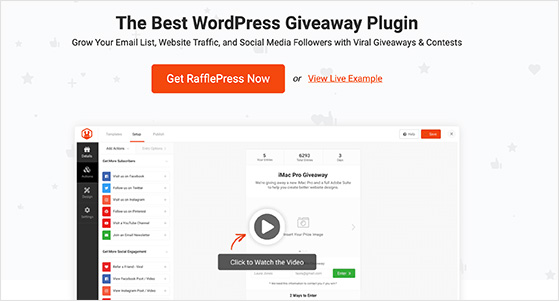
One of my favorite RafflePress features is its polls and survey action, which let users enter by completing a poll.
Did you know that most people answer surveys without really caring about the answers? Research shows that 60% of people answer questions indifferently or randomly without incentives.
RafflePress solves this by adding prizes. When people have the chance to win something, they’re more likely to answer your polls thoughtfully.
So, running a giveaway with a poll is a win-win. You get high-quality feedback, and your audience gets the chance to win a prize.
With that in mind, here’s how to create a poll in WordPress with RafflePress:
Step 1. Add New Giveaway
First, install and activate RafflePress on your WordPress website.
If you need help with this, see our guide on how to install RafflePress.
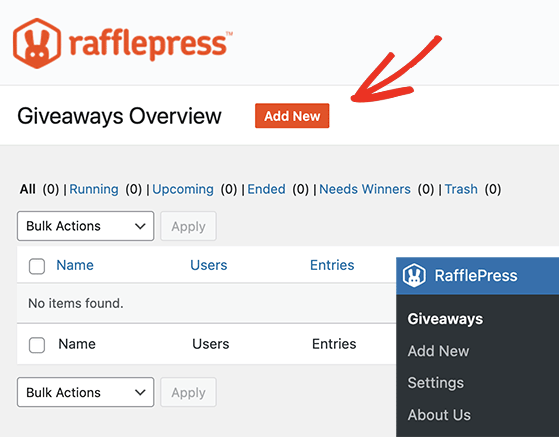
Then, navigate to RafflePress » Add New from your WordPress dashboard to start setting up a new giveaway.
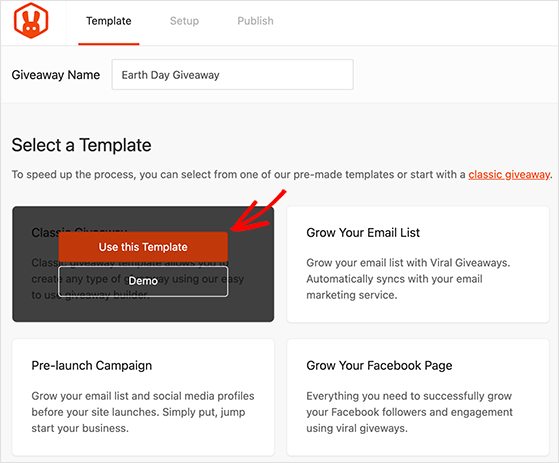
Provide a name for your giveaway and select a relevant giveaway template, or choose a blank template to start from scratch.
Step 2. Set Up Incentives
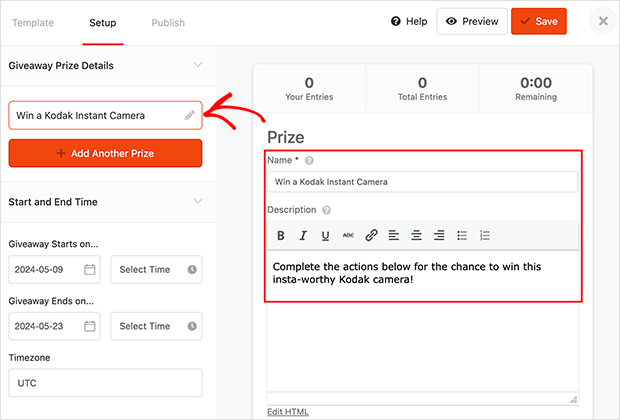
Next, add your prize information to encourage participation and combat survey abandonment.
Click the pencil icon to add your prize name and description.
You can then click the “Select Image” button to upload a photo of your prize or an eye-catching image.
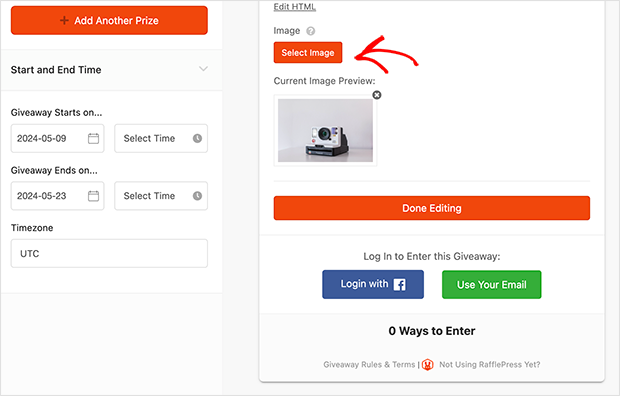
On the left-hand side, you’ll see options to set the start and end times and dates.
Step 3. Add a Poll or Survey Action
Next, click the “Actions” tab in the left sidebar. Here, you’ll find tasks users can complete to enter your giveaway.
For users to complete a poll, click the plus icon next to the “Polls and Surveys” action. This will add it to your giveaway widget on the right.
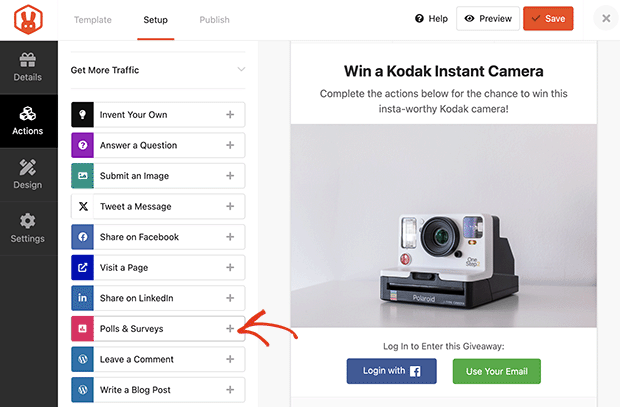
After adding the “Polls and Surveys” action, you can add your poll questions in the action settings panel.
You can choose between an open question or multiple choice in the dropdown menu. Then, type in your question and add the potential answer choices.
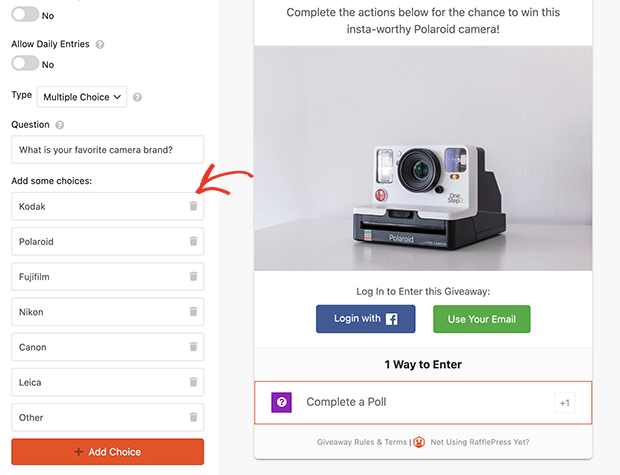
Once your poll is in place, you can make the question mandatory or optional for participants and assign the number of giveaway entries that action is worth.
Since your primary goal is to get users to submit your poll, I recommend making that action mandatory and awarding the highest number of entries for completing it.
Add Bonus Actions (Optional)
If desired, you can add extra actions for users to complete to enter your giveaway. They can include joining an email list, visiting a URL, leaving a blog comment, or sharing your giveaway on social media.
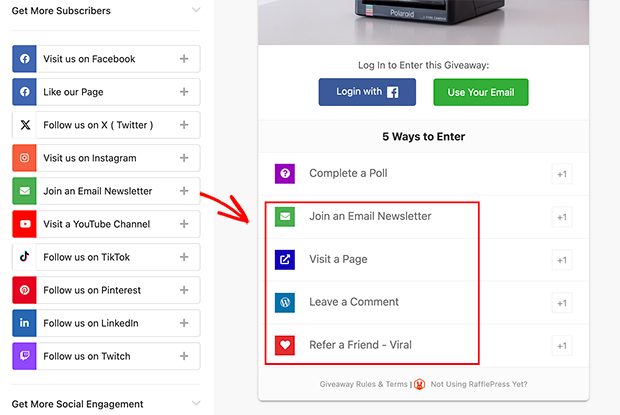
By offering more chances to win, you make your giveaway more attractive, which can result in more people completing your poll.
Step 4. Customize Your Poll Giveaway
Now, click the “Design” tab to add some personality to your giveaway. Here, you can change the widget layout, choose custom fonts, and set custom button colors.
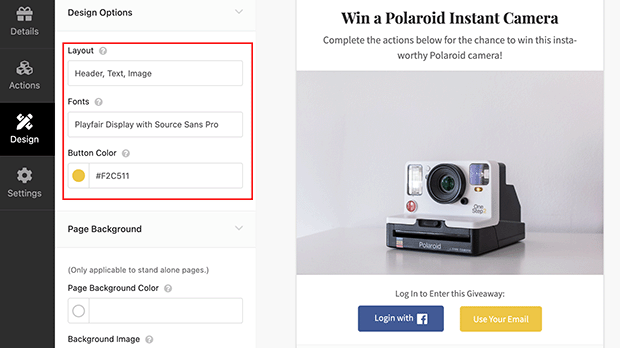
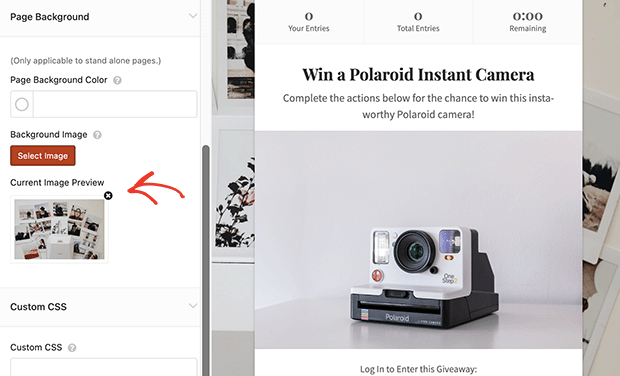
You can also choose a background color or upload a custom background image. This is ideal if you plan to use RafflePress’s giveaway landing page option.
Configure Your Poll Giveaway Settings
You’ll find more customization options on the Settings page, including email verification, success tracking and redirection, and Recaptcha for spam protection.
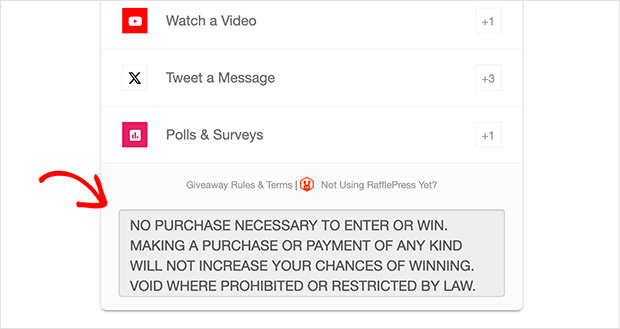
The most important option in this tab is the “Giveaway Rules.” This is where you’ll outline the requirements and eligibility of your contest to ensure it’s fair, transparent, and legal.
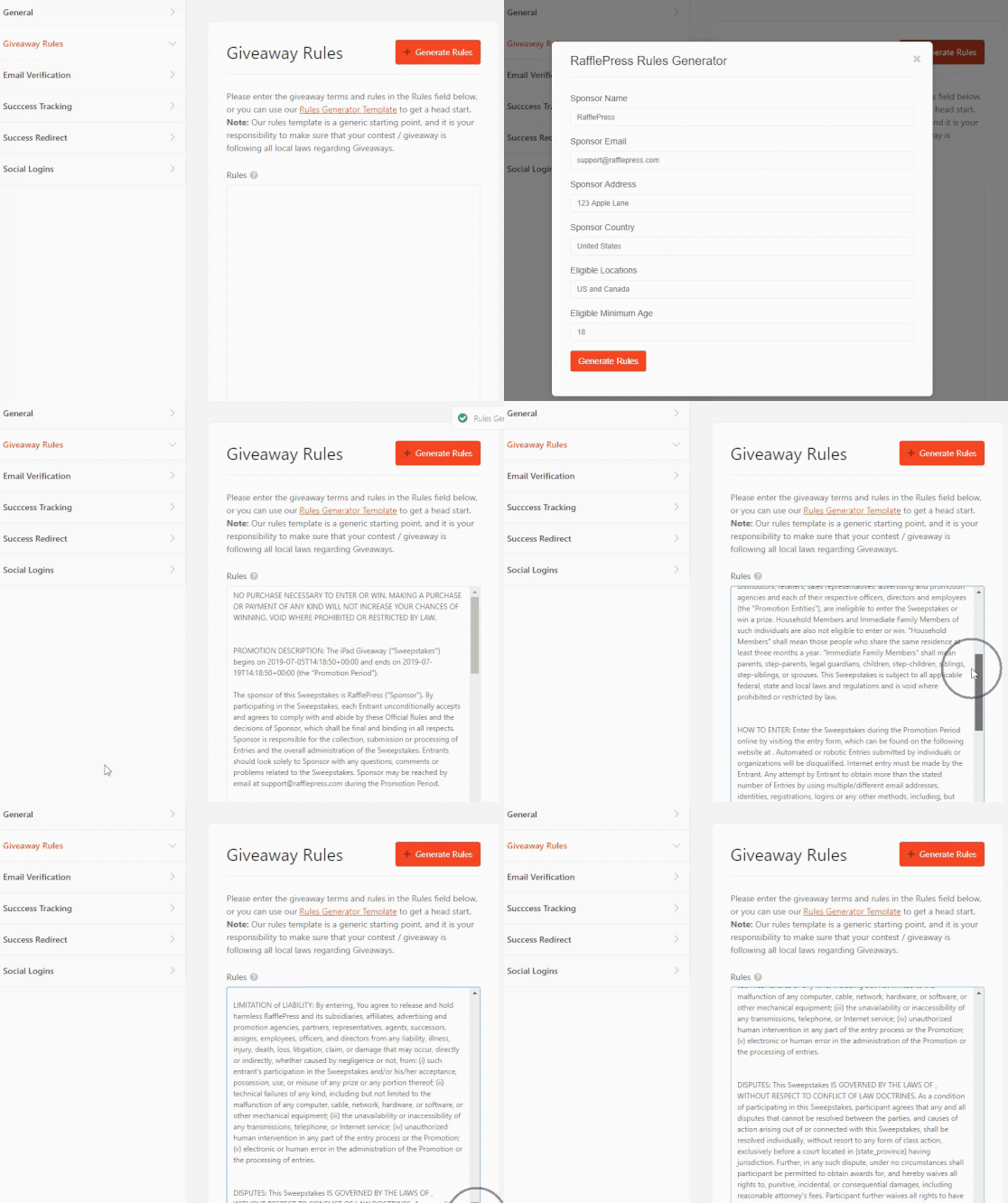
RafflePress has a built-in giveaway rules generator to make setting your rules easier. Simply answer some questions about your promotion, and the plugin will generate the rules automatically and display them on your giveaway widget.
Step 5. Publish Your Poll
When you’re happy with your giveaway, click the “Publish” button at the top of the builder.
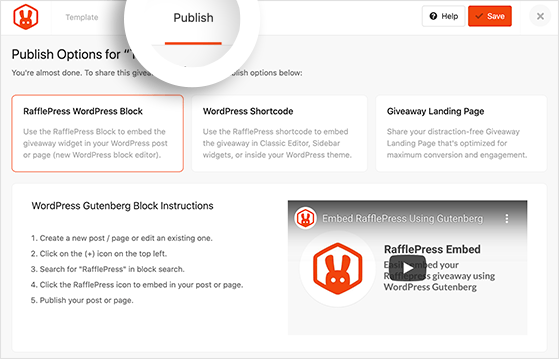
Here, you can choose from 3 methods:
- Embedding your giveaway in a post or page with the RafflePress block
- Using a WordPress shortcode
- Publishing your giveaway on a standalone landing page
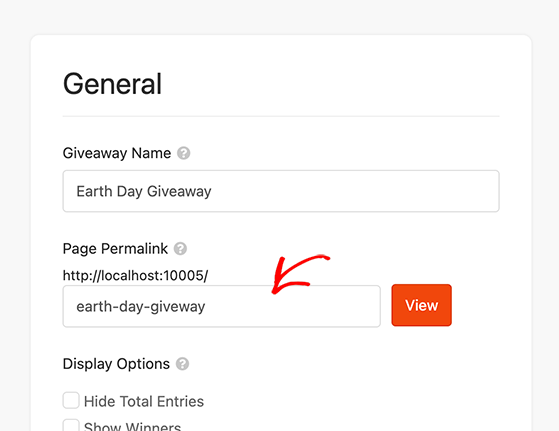
The giveaway landing page option is my top choice because it removes unnecessary distractions. It’s also the fastest way to get your poll live.
Simply assign a URL in the General Settings tab, and that’s it. When your promotion goes live, you can share that page to encourage your audience to participate.
Here is an example of my poll on the front end of my test website:
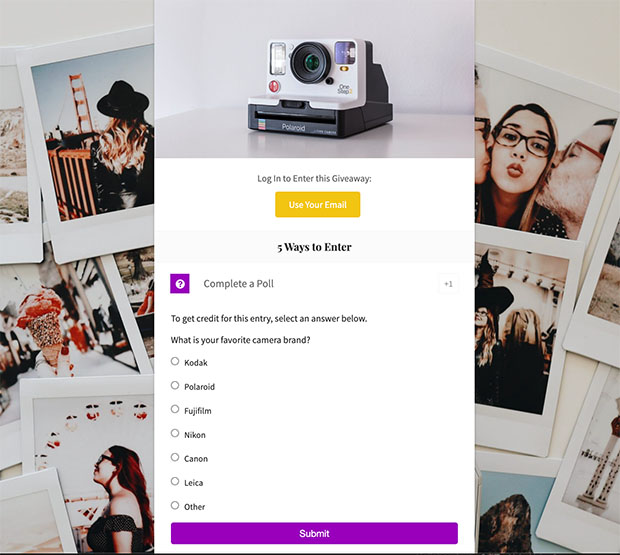
Pro Tip: When your poll giveaway ends, ensure you draw the winners fairly. For the steps, see my guide on how to pick a winner of a giveaway.
How to Create a WordPress Poll with WPForms
Takeaway: WPForms gives you full control over how your poll looks and functions. It’s great for collecting votes, opinions, or feedback directly on your blog posts or landing pages.
WPForms is another excellent choice for creating a poll in WordPress and any other type of online form. It’s one of the best WordPress contact form builders, with over 6 million users.
I’ve used this plugin for 10 years and haven’t found a better solution for building high-quality forms. Its drag-and-drop builder is beginner-friendly, allowing you to change how your polls look without writing code.
Step 1. Install and Activate WPForms Pro
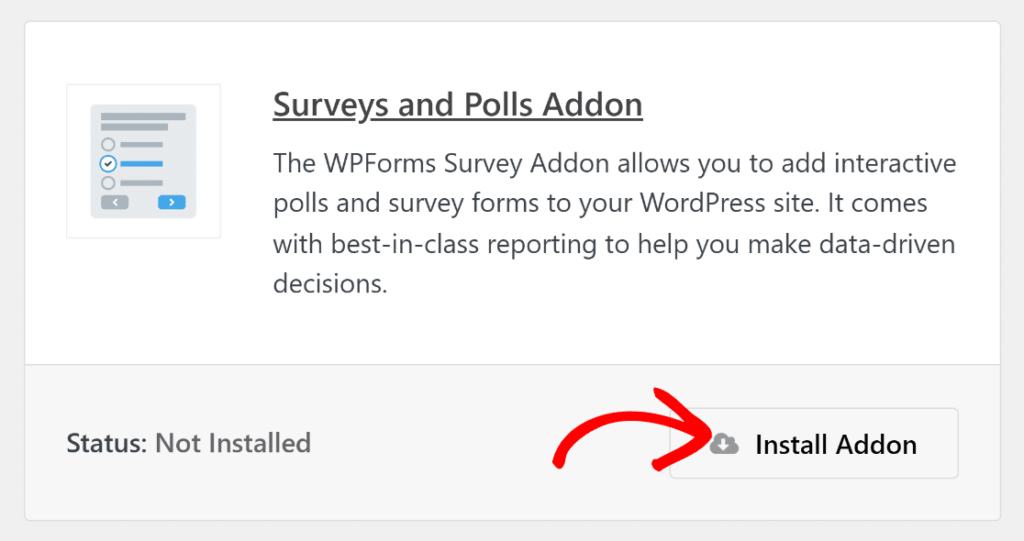
To get started, you’ll need to install and activate WPForms Pro on your WordPress website. The Pro version includes the Surveys & Polls add-on, which you’ll need to create your poll.
If you need help with this step, see this guide on how to install a WordPress plugin.
After activating the plugin, navigate to the Addons section to install the Surveys and Polls addon.
Step 2. Create Your Poll
Next, go to WPForms » Add New to start building your poll-specific WordPress form.
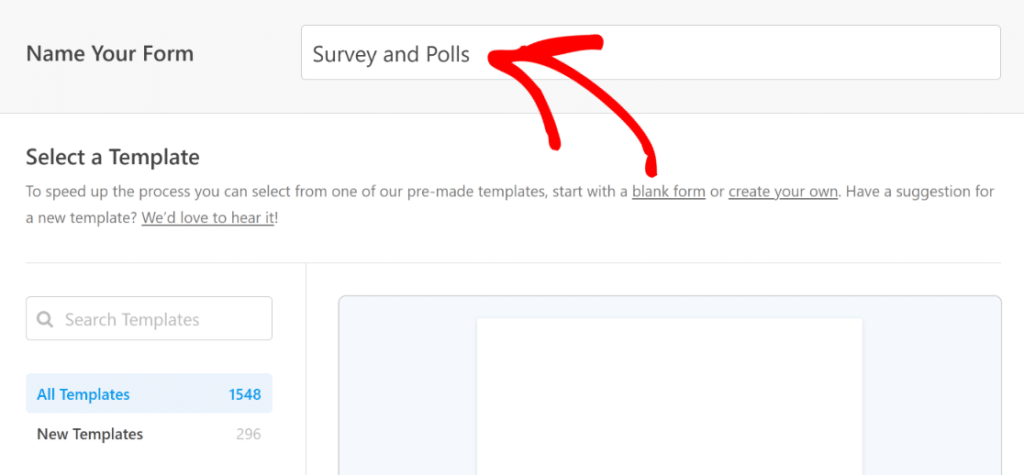
Give it a descriptive title, and in the search box, search for “Poll.” This will reveal several pre-made poll templates.
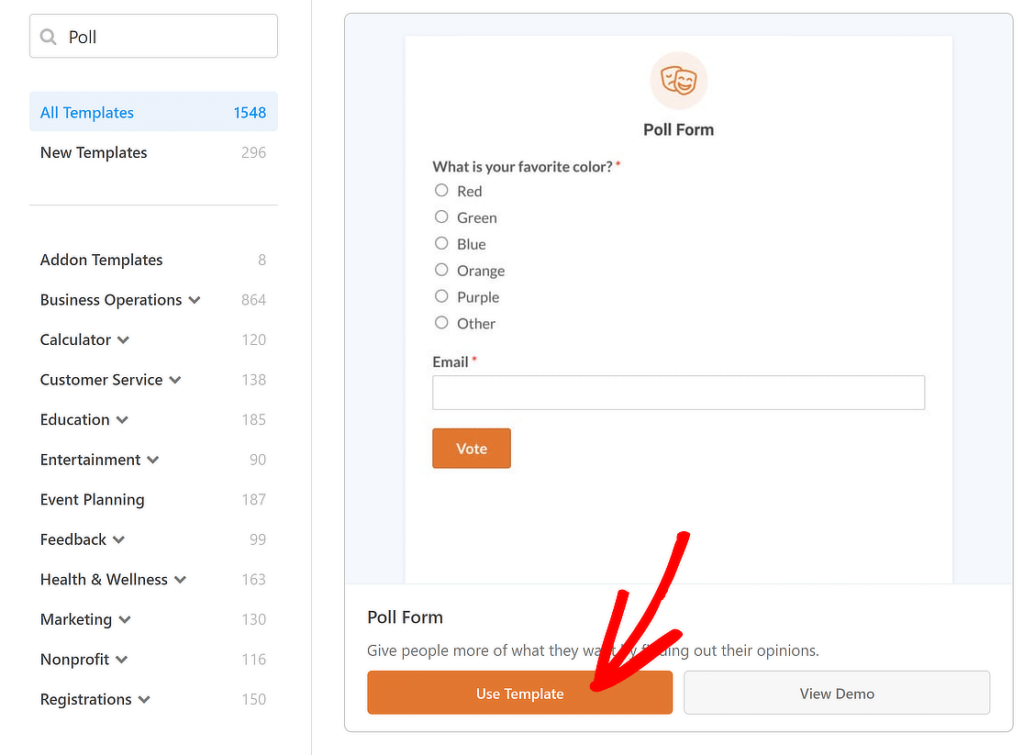
You’ll need the “Poll Form” template, so click it to choose that option.
WPForms’ form builder will open, allowing you to customize the poll questions, add new form fields, rearrange existing ones, and configure various settings.
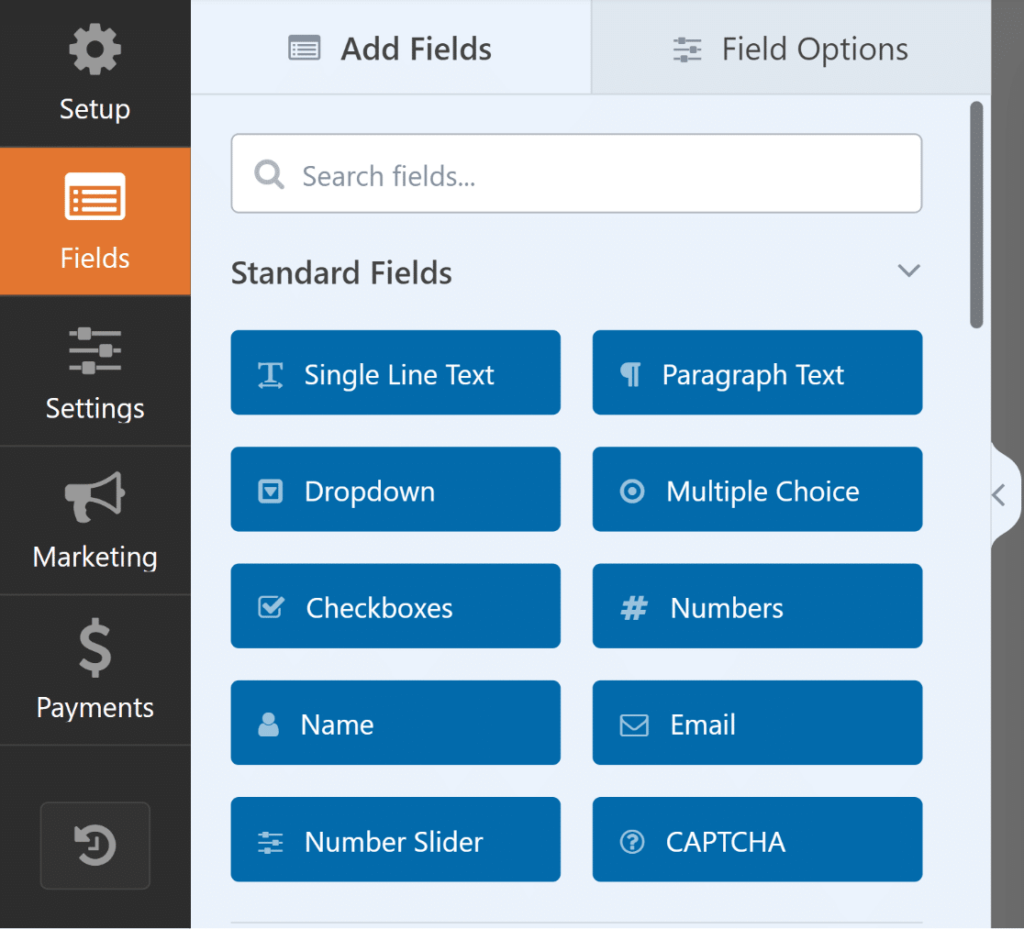
Step 3. Customize Your WordPress Poll
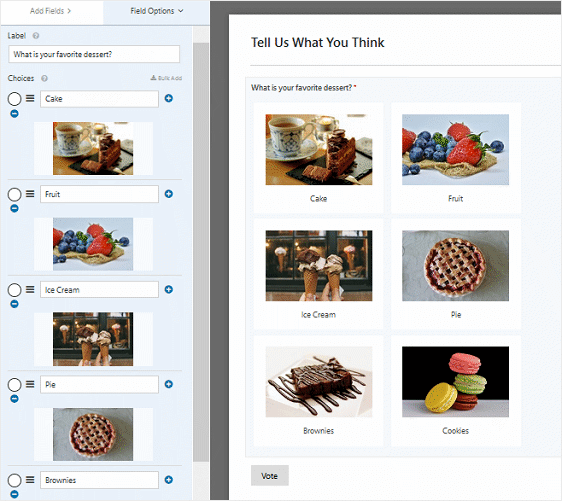
Explore the available options to tailor the poll’s appearance, behavior, and results display. For example, you can upload an image for each poll option.
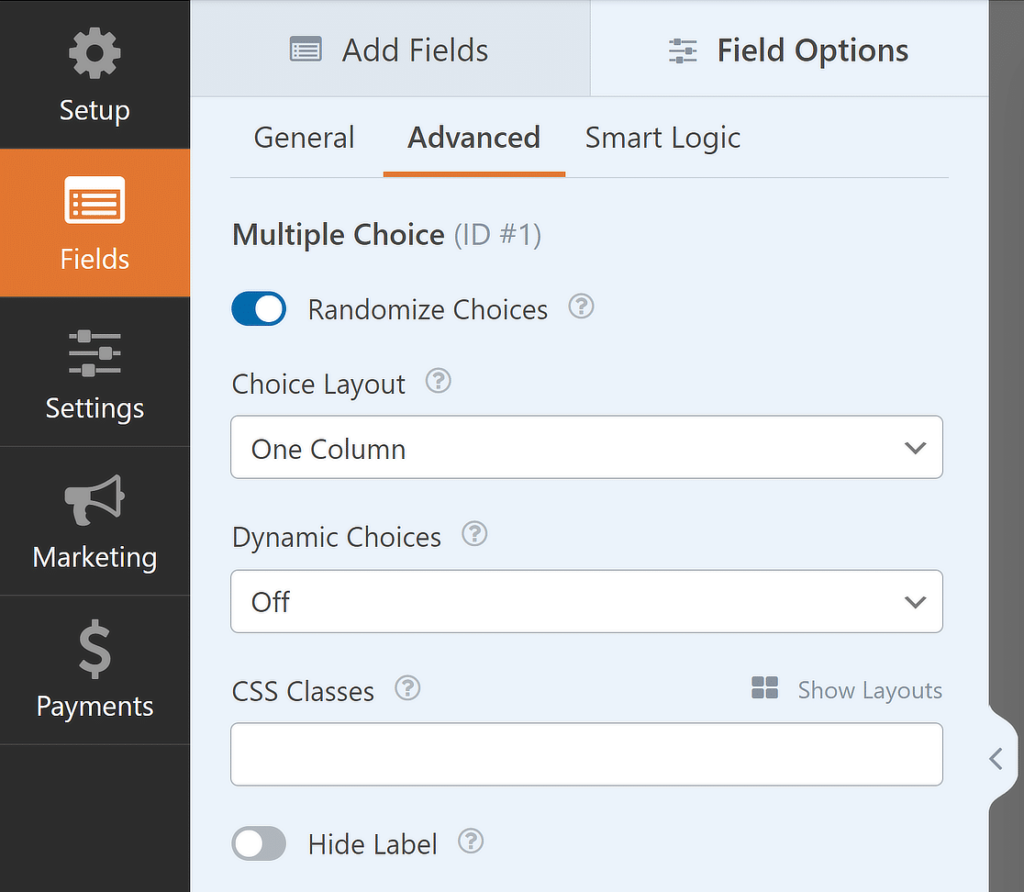
You can also randomize the poll questions to reduce order bias for your poll.
Step 4. Enable Poll Results and Publish
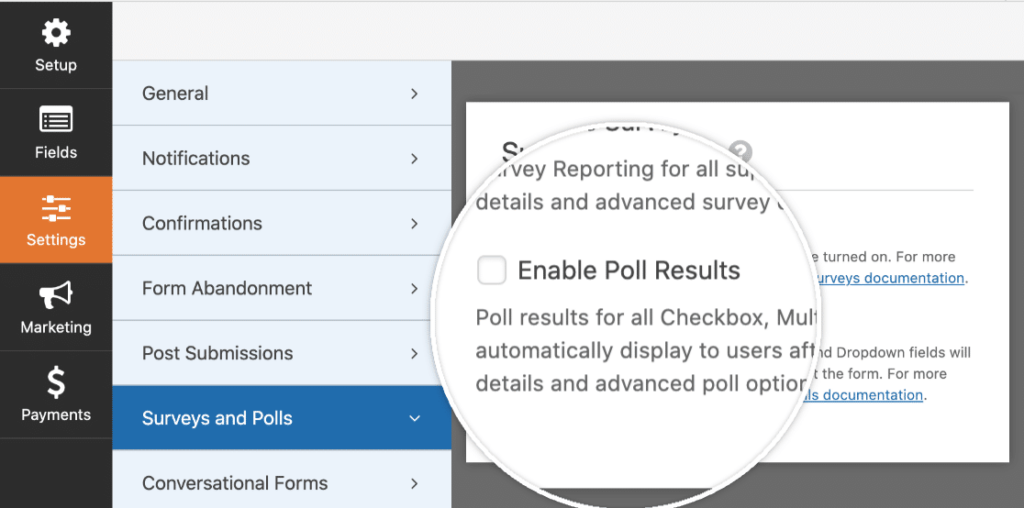
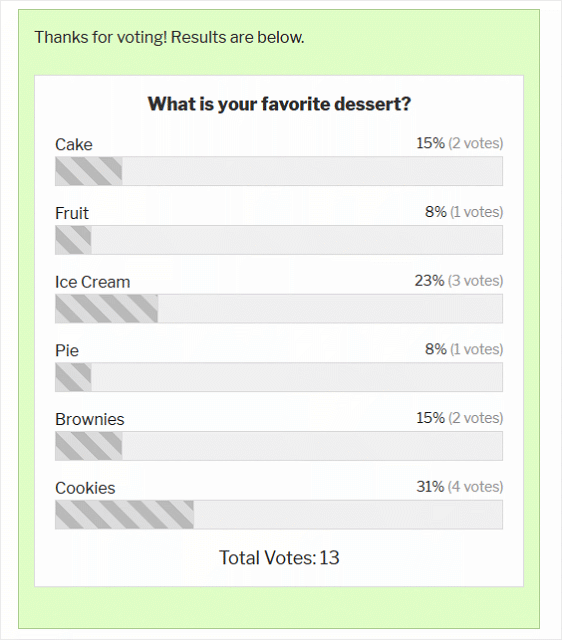
Chances are you’ll want users to see your poll’s results after they submit it. You can enable this option by visiting Settings » Surveys and Polls and choosing the “Enable Poll Results” checkbox.
Once you’ve done that, you’re ready to publish your poll. To do this, edit or create a new post or page and add the WPForms block.
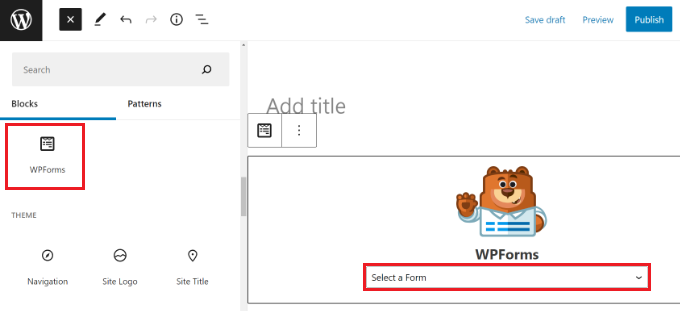
From there, select your poll form from the drop-down menu.
After updating or publishing, you can preview the form live on your website. Here’s an example of my poll results page to see how they look.
How to Create a Poll with UserFeedback
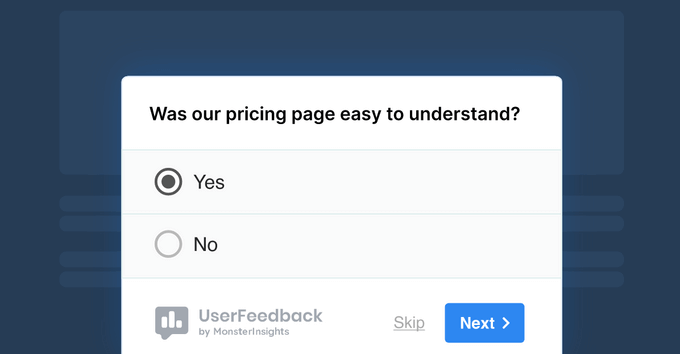
Takeaway: UserFeedback makes it super easy to show quick polls as popups. It’s the fastest option if you just want a simple yes/no or multiple choice question without building a full form.
The last method I’ll cover in this guide involves the UserFeedback plugin. It’s a popular WordPress poll plugin that lets you collect real-time feedback from website visitors.
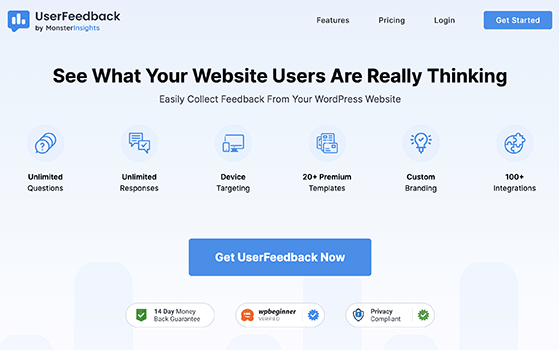
With unlimited popup polls and submissions, it’s an easy way to gather valuable feedback from your audience to help grow your business.
Step 1. Install and Activate UserFeedback
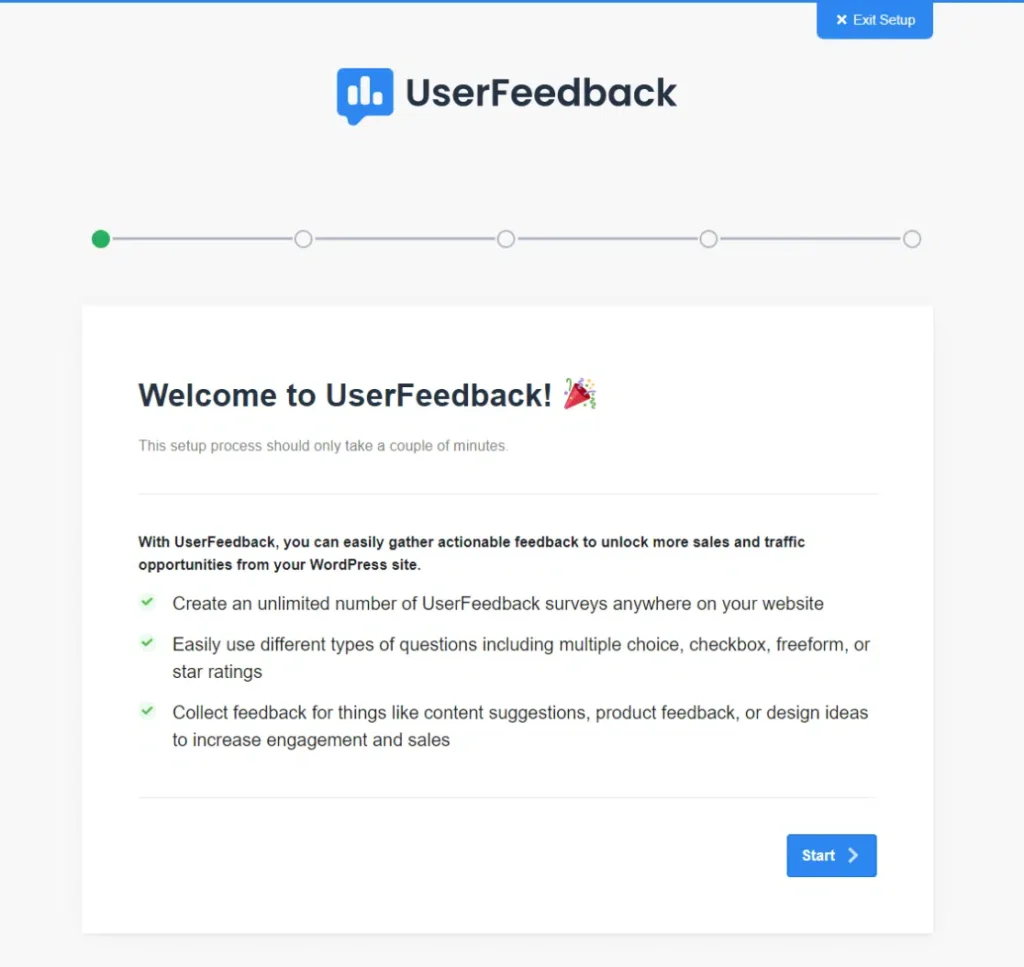
Start by downloading the UserFeedback plugin and installing it on your WordPress site. Once activated, the setup wizard will guide you through the initial configuration process.
Step 2. Create Your Poll
After setting up the plugin, follow the prompts to create your poll questions. You can select from preset options or create custom questions.
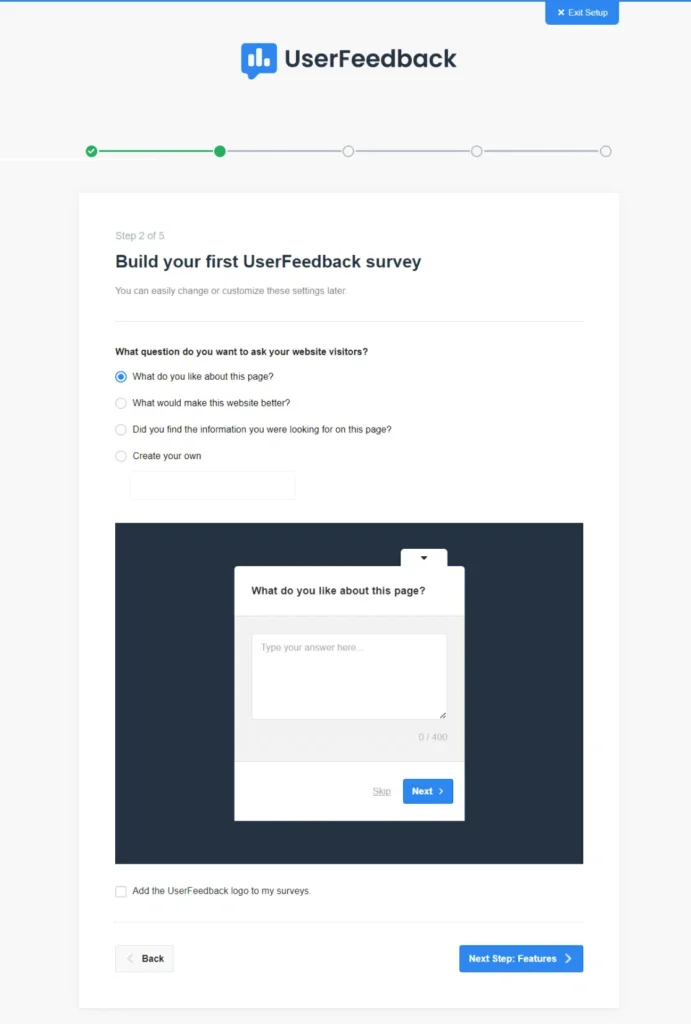
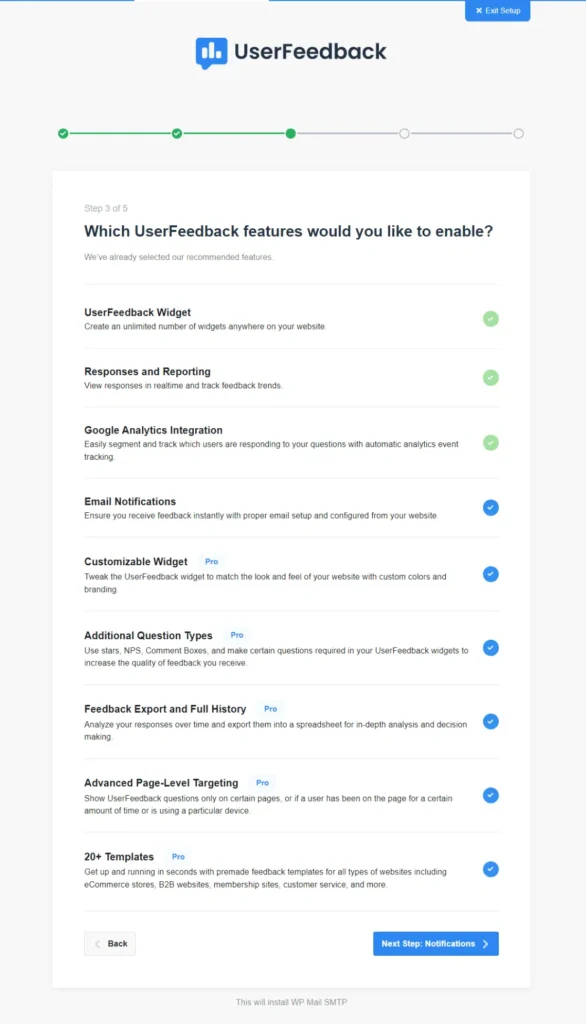
Next, explore the available features and enable the ones that align with your goals and audience preferences.
Step 3. Configure Notifications
You can set up an email address on the next screen to receive survey responses and notifications.
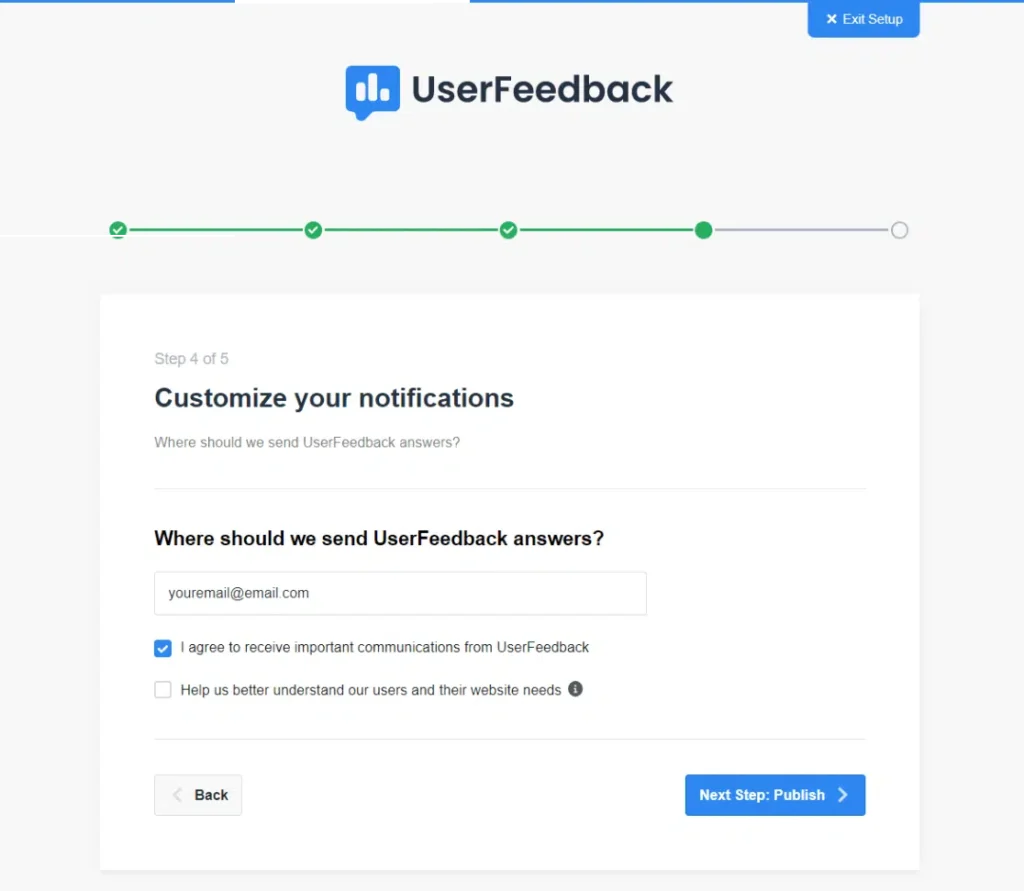
You can also receive updates and communications from the UserFeedback team to stay informed about new features and best practices.
Step 4. Publish and Customize
After completing the setup process, UserFeedback will begin installing the features you chose earlier. When the installation is complete, click the Exit to Dashboard button.
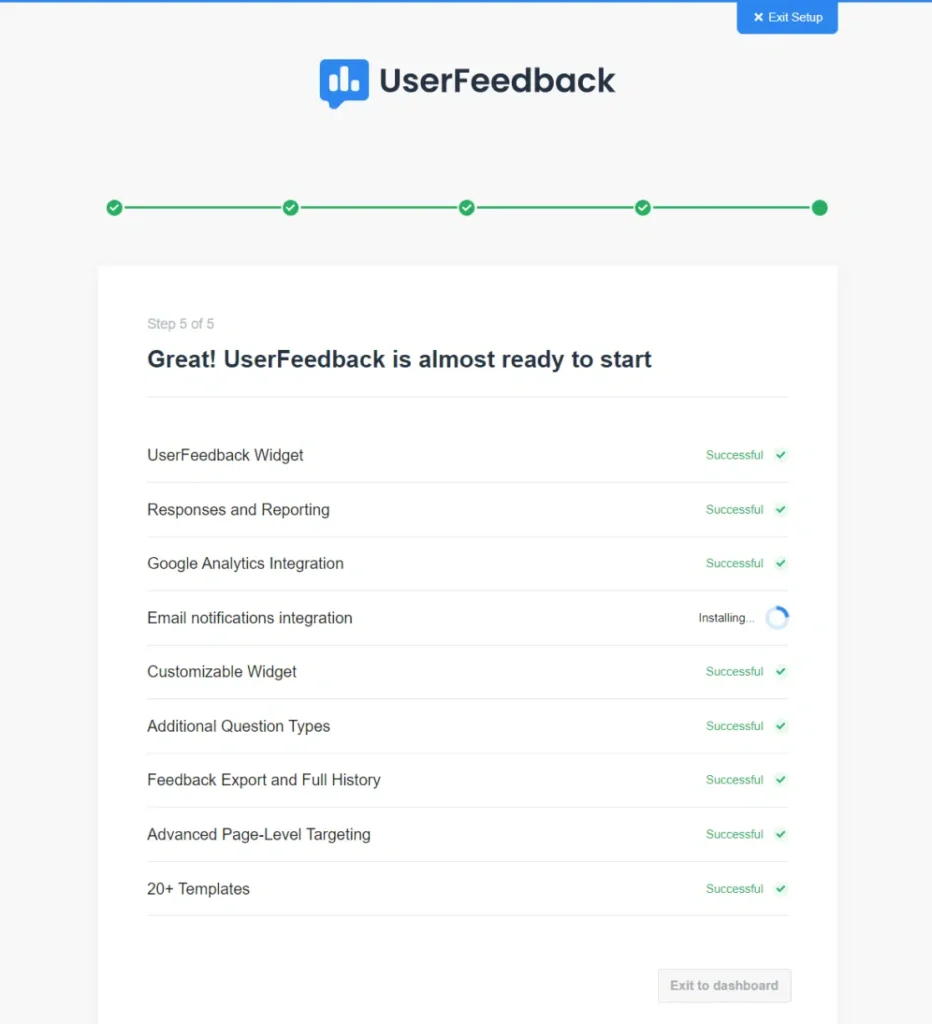
Your WordPress poll is now ready and published on your site.
Here’s an example of my demo poll, which will give you an idea of how it looks:
Best Practices for WordPress Polls
1. Know Your Goal
Before you add a poll, decide what you want to learn. Are you getting feedback on a product idea? Trying to boost engagement? A clear goal helps you write better questions.
2. Keep It Short
Most people will only answer a few questions. Stick to one topic and limit your poll to 1–3 questions for the best completion rates.
3. Use Simple, Clear Language
Write questions at an 8th-grade reading level. Avoid jargon or complicated words — make it easy for everyone to understand and respond.
4. Give Useful Answer Choices
Make sure your options cover all likely answers without overwhelming people. Add an “Other” option if needed.
5. Choose the Right Placement
Put your poll where people will see it: a high-traffic post, sidebar, or giveaway landing page. You can also use a popup to get attention.
6. Promote It
Don’t just publish and hope. Share your poll on social media, in your email newsletter, and across your site to get more responses.
7. Use the Results
Polls only help if you take action. Use the feedback to improve your content, update offers, or plan future blog posts.
I hope this guide has helped you learn how to create a poll in WordPress. Whether you choose RafflePress, WPForms, or UserFeedback, each option can help you engage with your audience, gather valuable feedback, and make data-driven decisions for your website’s success.
For more polling tips, check out my other WordPress tutorials:
- How to Create a Survey on WordPress for Better Customer Feedback
If you liked this article, please subscribe to our YouTube Channel for RafflePress video tutorials. You can also find us on Twitter and Facebook.


