How Exit Intent Popups Work (And 12 Ideas That Actually Convert)
 Stacey Corrin
Stacey Corrin
Stacey Corrin
 John Turner
John Turner
John Turner
TL;DR: How Exit Intent Popups Work (And 12 Ideas That Actually Convert) Exit intent popups appear just as a visitor is about to leave your site, giving you one last shot to capture their email, recover a cart, or start a relationship.
- What they are: Overlays triggered by cursor movement toward the browser bar on desktop, or rapid scroll velocity on mobile.
- How well they work: Exit intent popups convert about 2-3% of abandoning visitors on average, with well-optimized campaigns reaching 10-20%.
- Best offer types: Giveaway entry, content upgrade, cart reminder, discount code, or survey. Each works for a different goal.
- Top tool: OptinMonster handles the exit intent targeting; RafflePress is the right choice when you want to turn exit traffic into giveaway entrants.
- Best practices: Match the offer to the page, show it once per session, and test the headline before the design.
- Real examples: Fastrack recovered 53% of abandoning visitors; Fashion Nova runs a sitewide discount popup that removes the main objection at the moment of decision.
You spend time getting people to your site. They read a post, browse a product page, maybe spend three minutes looking around. Then they just close the tab. No email. No purchase. Just gone.
Exit intent popups give you one last shot before that happens. One well-placed offer, like a discount or a giveaway entry, can turn a disappearing visitor into a subscriber or a sale.
In this guide, I’ll walk you through how exit-intent technology works, 12 proven abandonment popup ideas, and some real examples that show what good looks like.
What Is an Exit Intent Popup?
An exit intent popup is an overlay that appears just as a visitor is about to leave your site. It is triggered by cursor movement toward the browser bar on desktop, or scroll velocity on mobile.
The goal is simple: stop visitors from bouncing and give them one last reason to take action. That might be a coupon, a giveaway entry, a content upgrade, or a quick reminder about their cart.
Exit popups often get a bad rap for being annoying. But these are different from standard popups because they only fire when someone is already leaving. There is no harm in one last nudge, and those numbers come from exit intent popups specifically, not general popup campaigns.
- Medstar Media used exit popups to increase client conversions by 500%
- Fastrack recovered 53% of abandoning visitors with a simple lightbox popup
According to Wisepops data on 1 billion popup displays, exit intent popups convert about 2-3% of abandoning visitors on average. Well-optimized campaigns, especially cart recovery popups, regularly hit 10-20%.
On mobile, exit-intent technology works differently than on desktop. Instead of tracking cursor movement, tools detect rapid upward scrolling (scroll velocity), tab-switching behavior, or a back-button press.
If you are using OptinMonster or a similar tool, mobile exit intent detection is configured separately, because it runs as its own trigger.
How Do You Create an Exit-Intent Popup?
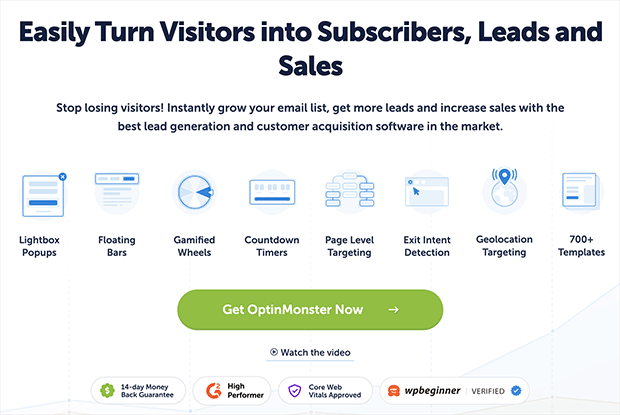
The easiest way to create an exit intent popup is with a drag-and-drop popup builder. You do not need to touch any code or mess with complicated settings. Just pick a template, customize the design, and publish it on your site.
OptinMonster is one of the best tools for this. I have been around it long enough through the WPBeginner ecosystem to see why it stays at the top of every list: the targeting rules are the real reason it is worth using.
You can show a different popup to cart abandoners than to blog readers, without touching a line of code.
It includes:
- Exit intent targeting for both desktop and mobile
- Dozens of ready-made popup templates
- Smart display rules and built-in A/B testing
It also works with WordPress, Shopify, WooCommerce, and major email platforms like Mailchimp and Constant Contact.
Follow this step-by-step guide to create an exit popup with OptinMonster.
Free: Download Our Giveaway Playbook
Templates, prize ideas, and promotion strategies in one guide.
12 Exit Intent Popup Ideas That Actually Convert (With Real Examples)
The type of offer you show makes a huge difference. Some popups drive clicks, while others get ignored or closed right away.
These twelve ideas are the ones I have found work best. You do not need to try everything. Just pick one that fits your goal and start there.
1. Run a Giveaway with RafflePress
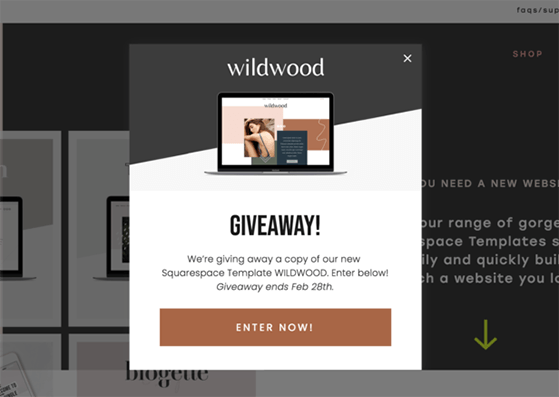
Giveaways are one of the easiest ways to grab attention, especially when someone is about to leave your site. You can use an exit intent popup to invite visitors to enter for a chance to win a prize in exchange for their email.
RafflePress is a WordPress giveaway plugin that turns your exit traffic into contest entrants, growing your email list through a refer-a-friend mechanic. With RafflePress, you can have a working giveaway popup live in under 20 minutes. The plugin handles entries, verification, and the landing page in one place.
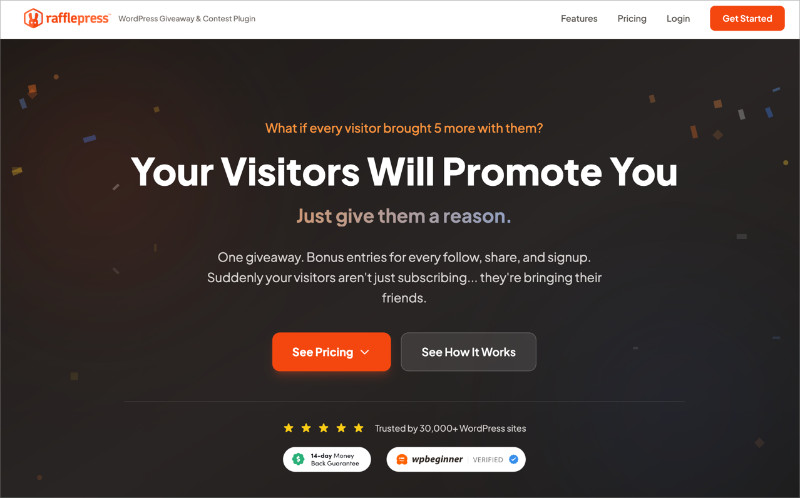
Just choose a template, customize your prize details, and use the built-in landing page or widget to collect entries.
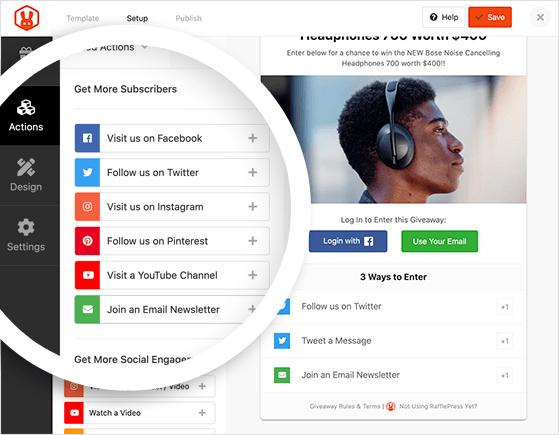
- Offer bonus entries for sharing or referrals
- Target your popup only to new visitors
- Send abandoning users straight to your giveaway page
There is also a retargeting angle most people miss. Visitors who enter your giveaway via an exit popup can be added to a custom audience for paid retargeting, making them 3-5x cheaper to convert than cold traffic because they have already raised their hand.
Here is an example of what that looks like:
If your goal is to grow your list or create buzz around a product launch, this is one of the most effective popup strategies to try.
For more details, see my guide on how to create an online contest with RafflePress.
2. Offer a Content Upgrade
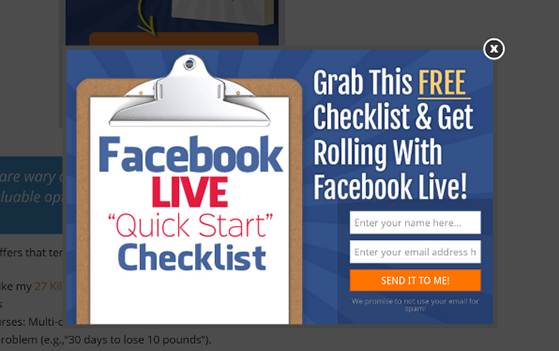
If someone is reading your blog and getting ready to leave, that is the perfect moment to offer a little extra value. A content upgrade is a free bonus that is directly related to the topic they were just reading.
For example, if your post is about running a photo contest, your popup might offer a downloadable checklist or PDF version of the guide.
Since the upgrade matches what they were already interested in, it feels helpful instead of disruptive, and that is exactly what makes it work so well.
You can learn more about high-converting content upgrades in this guide.
3. Remind Visitors About Cart Items
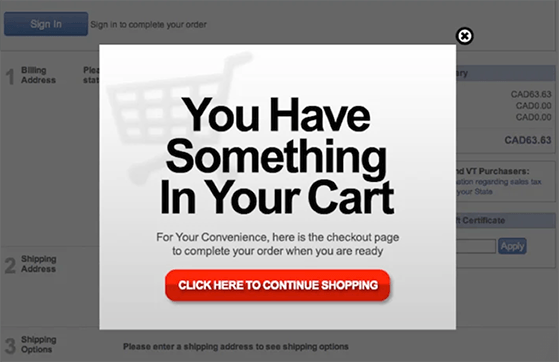
One of the biggest reasons people leave an online store without buying is forgetting they had items in their cart. That is where cart recovery popups come in.
Just before someone leaves, you can trigger a friendly reminder like “Wait, you still have items in your cart.” Add a product image or a quick summary of what they are leaving behind.
This works because of something called the Zeigarnik Effect. People are more likely to complete a task once it has been started but left unfinished.
If they are not ready to check out, give them the option to save their cart for later. You can also collect their email so you can follow up with a cart recovery sequence.
Need help setting that up? Here is how to create an abandoned cart email strategy.
4. Offer a Discount or Free Shipping
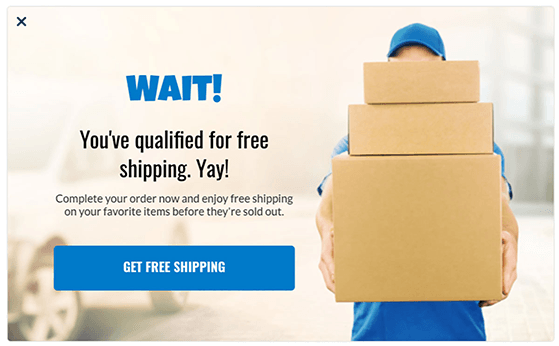
If someone is about to leave without buying, a last-minute discount or free shipping offer might be all they need to complete their order.
Use an exit intent popup to display a coupon code, or even better, apply the discount automatically with a single click. This reduces friction and keeps the checkout process smooth.
This type of popup does double duty. It recovers a potential sale and collects the visitor’s email so you can follow up later.
Just make sure you show the offer before they close the tab. Timing is everything with exit intent popups.
5. Add Urgency with a Countdown Timer
People tend to put off decisions, especially when there is no deadline. That is why adding urgency to your exit intent popup can boost conversions fast.
A countdown timer shows visitors that time is running out. Whether it is a limited-time discount, free shipping offer, or bonus freebie, the ticking clock encourages them to act now instead of later.
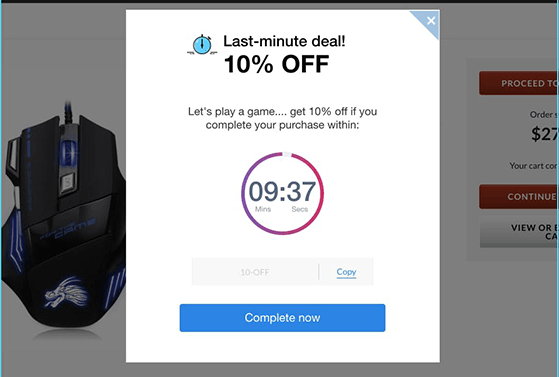
This tactic works especially well for flash sales, product launches, and seasonal offers. It taps into FOMO and gives people a clear reason to take action before the deal disappears.
6. Suggest a Related Product or Post
Not every visitor is ready to buy or sign up, but that does not mean you have to lose them. Sometimes, all it takes is pointing them to something else they might find useful.
Use your exit intent popup to suggest a related blog post, product, or free resource. This gives people a reason to stay on your site longer and explore more of what you offer.

Make sure the content or product you suggest is closely tied to what they were just viewing. The more relevant it is, the more likely they are to click.
7. Use a Yes/No CTA for Higher Engagement
Sometimes asking a simple question works better than a traditional form. A Yes/No popup gives visitors a clear choice and that small action can lead to big results.
This works because offering two options makes users feel in control. Most will click “Yes” if the offer is strong, especially if the “No” option is dull or easy to ignore.
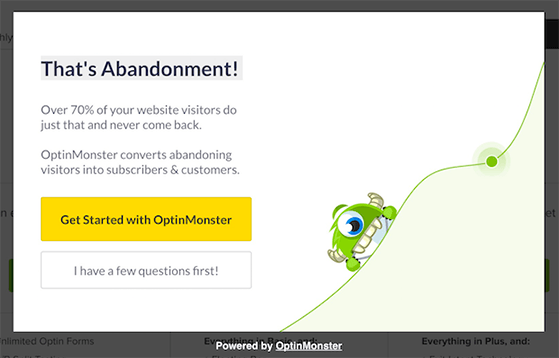
For example, you could ask: “Want to save 10% on your order?” with two buttons, “Yes, get my coupon” and “No, I’ll pay full price.” That contrast alone can drive more clicks.
8. Show Social Proof to Build Trust
Before someone commits to buying or signing up, they often want proof that others have done it first. That is where social proof can make a big difference.
Use your exit intent popup to highlight how many people have joined your list, used your product, or left positive reviews. This builds trust and helps visitors feel more confident in taking the next step.
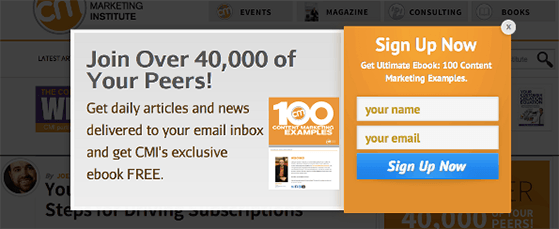
Even a simple message like “Join 12,000 other subscribers” can be enough to push someone from “maybe” to “yes.”
9. Ask for Feedback with a Quick Survey
If someone is about to leave, it is a great time to ask why. A quick one-question survey can give you insights into what is not working and help you fix it.
Keep it short and respectful. Ask something like, “What stopped you from signing up today?” and offer a few simple response options or a comment field.
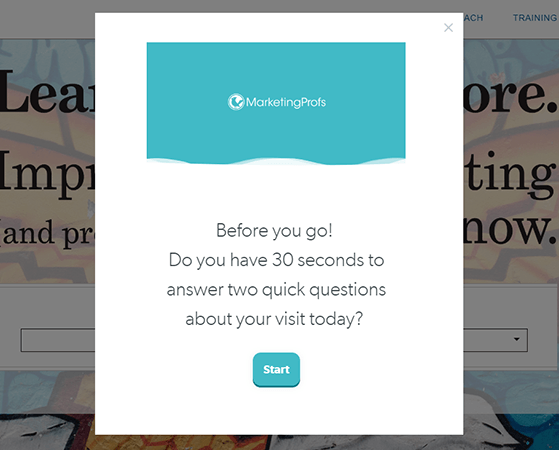
You can even offer a small incentive, like a coupon or freebie, as a thank you for their feedback. It is a helpful way to learn and re-engage visitors at the same time.
10. Grow Your Social Media Followers
If someone is not ready to join your email list or make a purchase, inviting them to follow you on social media is a low-pressure way to stay connected.
You can use an exit intent popup to highlight your Instagram, Facebook, or Twitter accounts, especially if you have a strong following or share valuable content regularly.
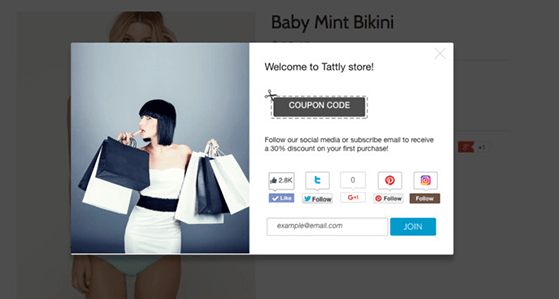
This works best when you mention what users will get by following you, like exclusive updates, behind-the-scenes content, or special offers.
11. Use Animation to Draw Attention
When someone is about to leave your site, you only have a second to grab their attention. Animating part of your popup can help you do that.
Try adding a subtle bounce to your call-to-action button or a flashing arrow that points to your form. These small movements draw the eye without being annoying.
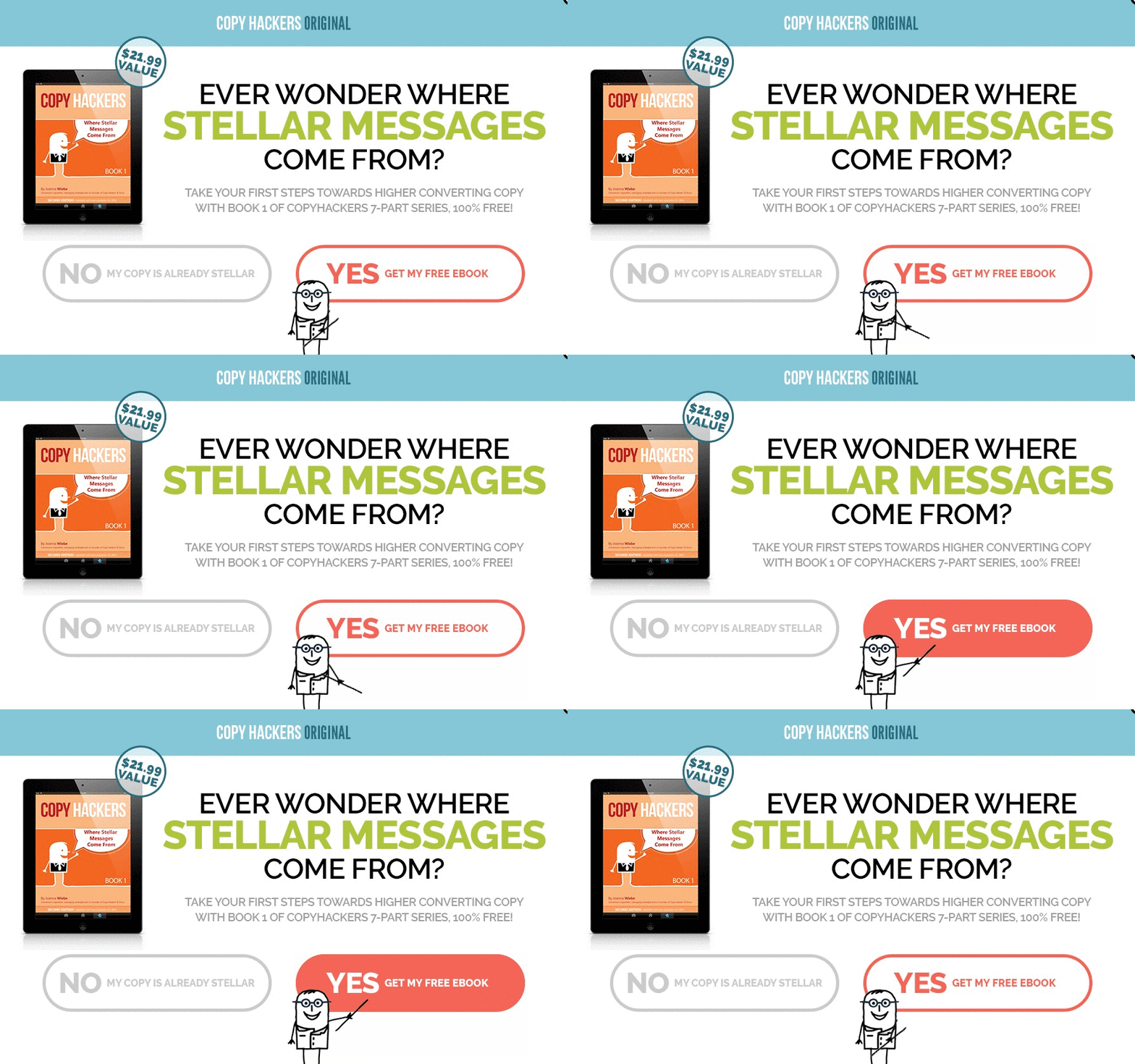
Do not overdo it. The goal is to highlight the next step, not distract people. Just enough motion to make your message stand out is all you need.
12. Make the CTA Clear and Specific
Your exit intent popup only works if people understand what to do next and want to do it. That is why your call-to-action (CTA) needs to be crystal clear.
Skip the generic buttons like “Subscribe” or “Submit.” Instead, tell users exactly what they are getting. For example: “Get My 20% Off Code” or “Send Me the Free Checklist.”
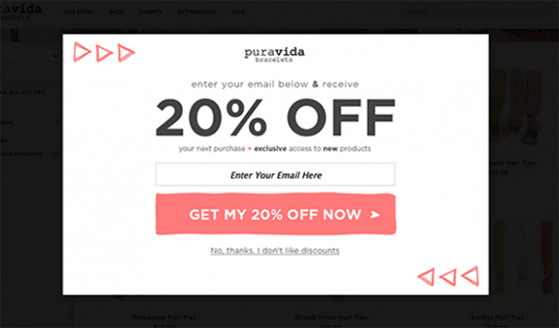
The more specific your CTA, the more confident visitors feel about clicking. Give them a reason, not just a button.
Exit Intent Popup Best Practices
Running a popup is easy. Running one that works without irritating your visitors takes a little more thought. These are the practices that separate high-converting exit popups from ones people just close immediately.
- Match the offer to the page: A cart abandonment popup belongs on product and cart pages. A content upgrade popup belongs on blog posts. Showing the wrong offer on the wrong page hurts conversions and trust.
- Write a specific headline: “Wait, before you go” is not a headline. “Get 15% off your first order” is. The headline needs to state the offer, not stall for time.
- Use one CTA only: Give visitors one thing to do. Two options create hesitation. The only decision should be whether to take your offer.
- Cap frequency: Show the popup once per session, or set a cookie to suppress it for returning visitors who already dismissed it. Showing it on every visit destroys the experience.
- Test the offer before the design: When A/B testing, start with the offer type (discount vs. content upgrade vs. free shipping) before tweaking colors or fonts. Offer type has the biggest impact on conversion rate.
- Run each test for at least two weeks: Less than two weeks of data rarely reaches statistical significance. Optimize for conversion rate first, then email quality by tracking open rates on captured addresses.
How to Target Exit Intent Popups to the Right Visitors
The same exit popup shown to everyone on your site will underperform. Targeting rules let you show the right offer to the right visitor at the right moment, and that is where most of the gains are.
Page-level targeting.
Match the offer to what the visitor was looking at. On a product page, show a cart recovery popup with a discount or free shipping. On a blog post, offer the content upgrade. On your homepage, lead with your best email incentive. Mismatched offers are the main reason exit popups underperform.
Traffic source targeting.
Visitors from paid ads have already seen your offer once. A second version with different copy, or a more direct CTA, often converts better than the same message they clicked on. Organic visitors, especially first-timers from search, respond better to content-led offers like a checklist or guide than to a discount.
New vs. returning visitors.
A new visitor who is about to leave has not yet been convinced of the value. An email capture offer, like a free resource or giveaway entry, works well here. A returning visitor who keeps leaving without buying is a different problem. Try a more aggressive offer or a survey popup asking what stopped them.
Tools like OptinMonster let you configure all three targeting rules without code. You set them up once in the display rules panel and they run automatically. Most sites that see double-digit conversion rates on their exit popups are using page-level targeting, not a single popup for all traffic.
Real Exit Intent Popup Examples That Work
Seeing what works in practice is more useful than any checklist. Here are four real exit intent popup campaigns, each one worth studying for a specific reason.
Fastrack
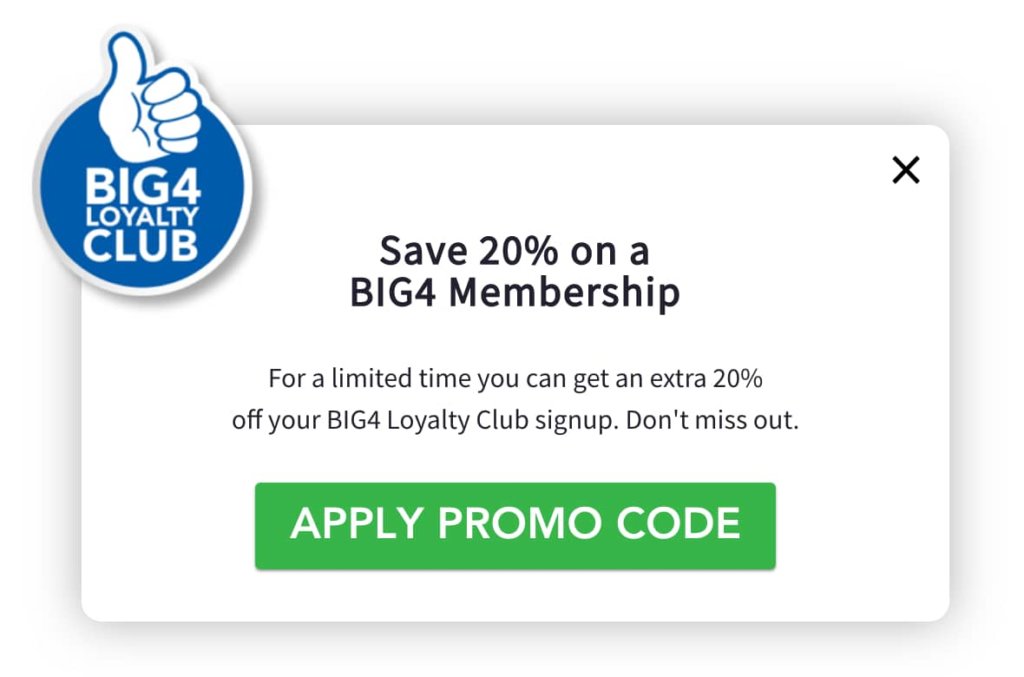
Fastrack’s popup offered a limited-time loyalty club discount that applied instantly when the visitor clicked, no code needed. It recovered 53% of abandoning visitors. One-click coupon application removes the friction that kills most discount popups at the moment of decision.
Le Creuset
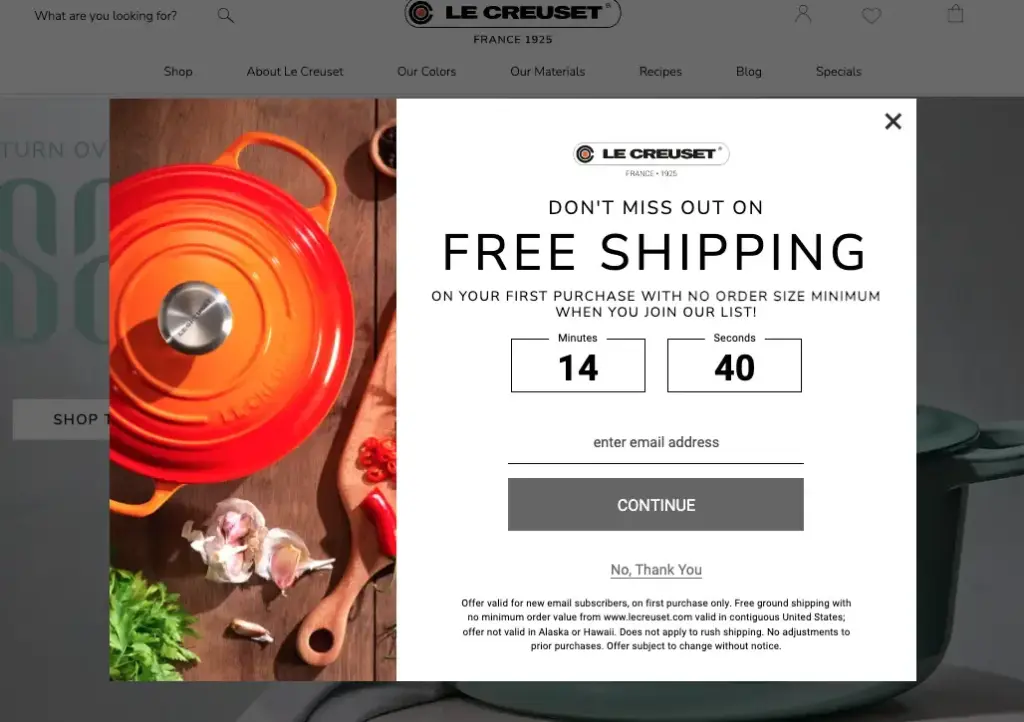
Le Creuset combines a discount with a countdown timer, making the choice feel immediate rather than deferrable. The financial incentive gets attention; the timer removes the option to “think about it later.” Both elements together consistently outperform either one alone.
Death Wish Coffee
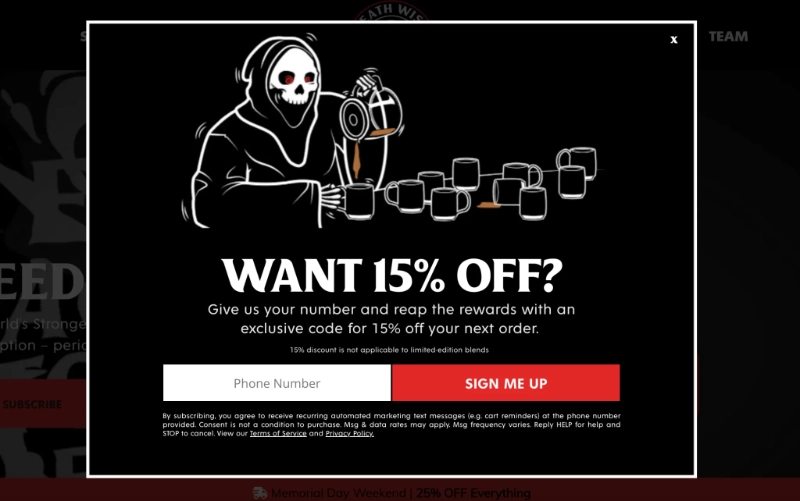
Death Wish Coffee asks for a phone number for SMS marketing instead of an email address. When every other popup in a visitor’s browser history says “enter your email,” an unusual ask stands out. It also captures a second channel, so the brand is not competing for inbox attention with everyone else.
Fashion Nova
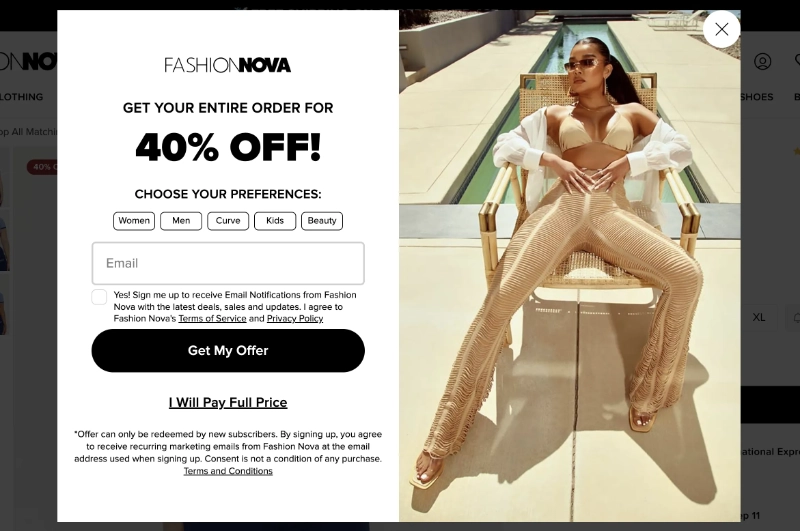
Fashion Nova’s popup offers 40% off sitewide with a single email field. “Sitewide” removes the objection that kills most discount popups: “will it apply to what I actually want?” A high percentage combined with no restrictions makes the offer hard to close without acting on.
FAQs About Exit Intent Popups
How do exit intent popups work on mobile devices?
On mobile, exit intent technology cannot track cursor movement toward the browser bar the way it does on desktop. Instead, tools like OptinMonster detect three mobile-specific signals: rapid upward scrolling (scroll velocity), tab-switching behavior, and back-button press. You typically need to enable mobile exit intent separately in your popup tool settings, as it runs as a distinct trigger from the desktop version.
What is the average conversion rate for exit intent popups?
According to Wisepops data on 1 billion popup displays, exit intent popups convert about 2-3% of abandoning visitors on average. Well-optimized campaigns, especially cart recovery popups with targeted offers, regularly reach 10-20%. The biggest driver of higher conversion is matching the offer to the page type and visitor segment.
How do I personalize exit intent popups for different visitors?
Popup tools like OptinMonster let you set display rules based on the page being viewed, the traffic source, and whether the visitor is new or returning. On product and cart pages, show a cart recovery offer. On blog posts, show a content upgrade. For paid traffic, use different copy than you use for organic visitors. Most double-digit conversion rates come from page-level targeting, not a single popup for all traffic.
How do I A/B test my exit intent popup?
Start by testing the offer type before anything else. Discount vs. content upgrade vs. free shipping will have a bigger impact on your conversion rate than headline wording or button color. Run each test for at least two weeks to reach statistical significance. Once you have a winning offer type, then test the headline, then the CTA button copy. Optimize for conversion rate first, then email quality by tracking open rates on captured addresses.
Do exit intent popups hurt SEO?
No, exit intent popups do not hurt SEO. Since they only appear when a visitor is about to leave, Google does not classify them as intrusive interstitials under its page experience guidelines, which apply to popups that block content immediately on page load. Make sure your popup loads fast, does not block content on arrival, and is easy to dismiss. Those three things keep you clear of any penalty risk.
If someone is already halfway out the door, you have one last shot to bring them back, and that is precisely what exit intent popups are for.
Even a simple offer like free shipping or a helpful link to your best content can turn that bounce into a subscriber, a follower, or a sale. Pick one idea from this list and set it up.
Already running a giveaway with RafflePress? Add an exit popup to promote it. It is one of the easiest ways to boost entries without changing a thing on your site.
Keep learning:
- How to Reduce Shopping Cart Abandonment
- Lead Generation Ideas to Grow Your Audience
- 7 Best WordPress Popup Plugins (Compared)
- How to Increase Engagement on Facebook
- How to Do a Giveaway to Grow Your Email List
If you liked this article, please subscribe to our YouTube Channel for RafflePress video tutorials. You can also find us on Twitter and Facebook.

