How to Create an Affiliate Program in WordPress (Easy Way)
 Stacey Corrin
Stacey Corrin
Stacey Corrin
 John Turner
John Turner
John Turner

TL;DR: How to Create an Affiliate Program in WordPress
An affiliate program lets you pay partners a commission for every sale they refer. AffiliateWP makes it easy to set up in WordPress without code.
- Install AffiliateWP – Purchase a plan, install the plugin, and activate it on your site.
- Run the setup wizard – Connect your store integration, set your commission rate, and configure cookie duration.
- Customize the affiliate area – Set up the signup page and registration form your affiliates will use.
- Approve affiliates and manage commissions – Review applications, set custom rates, and track performance.
- Set up payments – Use AffiliateWP’s Payout Service, PayPal, or manual payouts.
- Promote your program – Email existing customers and list your program on affiliate directories to recruit partners.
When I added an affiliate program to my own website, it opened the door to sales I couldn’t have driven on my own. You give partners a unique link, they promote your products, and you pay them a commission on every sale they send. Businesses earn an average of $12 for every $1 spent on affiliate marketing, and you don’t need coding or a developer to get started.
This guide walks through how to create an affiliate program in WordPress using AffiliateWP, step by step.
What Is an Affiliate Program?
An affiliate program is a referral system where you pay partners (bloggers, influencers, or other businesses) a commission for promoting your products. For example, if a blogger sends you a $100 sale with their unique link and you offer 20% commission, they earn $20.
It’s a popular way for small businesses to drive leads, sales, and brand awareness, while affiliates earn passive income.
Just remember: the FTC requires clear disclosure when affiliates promote your products. You can add a simple disclosure notice or link to a policy page on your site.
How to Create an Affiliate Program in WordPress
For this tutorial, we’ll show you how to create an affiliate program with AffiliateWP, the best affiliate plugin for WordPress. It makes it super easy to set up any affiliate or referral program on your WordPress website.
From its built-in affiliate area, affiliates can track their performance and earnings, find referral links, and more. You can also have unlimited affiliates and make unlimited creatives to promote your products, service, or website effectively.
AffiliateWP has an integrated payouts service, so you can quickly pay affiliates directly. Plus, you can track top-earning affiliates, moderate affiliate registrations, and edit individual accounts in your affiliate management dashboard.
If that wasn’t enough, AffiliateWP integrates seamlessly with popular eCommerce tools and WordPress plugins like WooCommerce, PayPal Buttons, MemberPress, Easy Digital Downloads, and more.
One thing to know before you install: AffiliateWP tracks referrals through integrations with your store or membership platform. If you run a WooCommerce store, you’ll connect it during setup. Easy Digital Downloads, MemberPress, and 20+ other plugins are supported too.
Follow the steps below to set up your affiliate program in WordPress.
Step 1. Install and Activate AffiliateWP
To get started, head to the AffiliateWP pricing page and pick a plan that best suits your business needs.
After completing the purchase, go ahead and install the plugin on your WordPress site. If at any point you get stuck, follow this step-by-step guide on installing and activating a WordPress plugin.
Step 2. Complete the AffiliateWP Setup Wizard
AffiliateWP is super easy to set up with its handy setup wizard. Once you’ve activated the WordPress plugin on your website, click the AffiliateWP link in your WordPress dashboard, and the wizard will launch automatically.
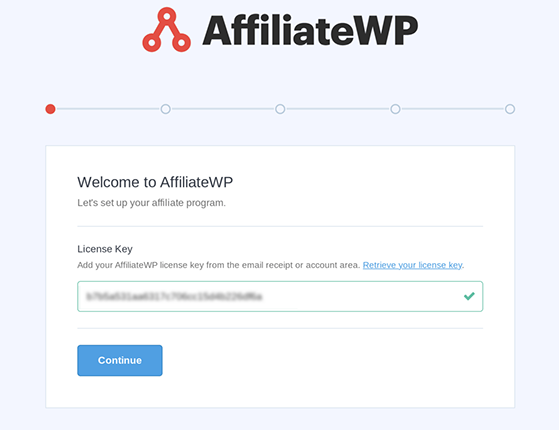
The first screen will ask you to enter your plugin license key. You can find your key in your account dashboard or your AffiliateWP welcome email. Copy the key, then paste it into the license key field and click Continue.
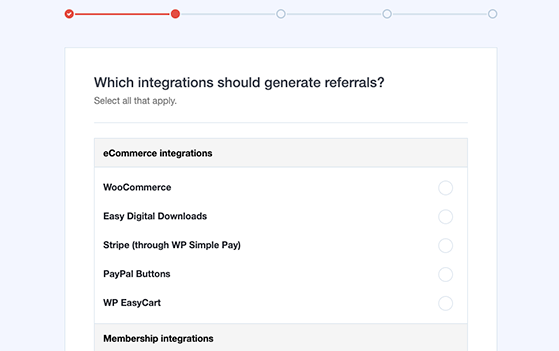
On the next screen, you can choose an integration to generate referrals. There are over 20+ integrations, including forms, memberships, courses, donations, invoices, and more. Simply tick your preferred integration and click the Continue button.
The next page lets you enter some basic information about your affiliate website. You can enter your currency, referral type, and referral amount.
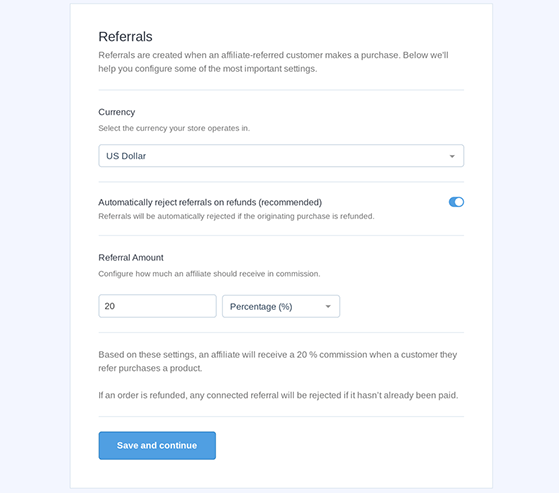
You can change these settings later if you need, so enter your best estimate, then click on the Save and Continue button.
If you’re unsure what rate to start with: digital products like software and online courses typically support 20 to 50% commissions, because there’s no cost of goods. Physical products usually land in the 5 to 15% range. Start conservative and raise it once you see what attracts quality affiliates.
Now you can choose the structure of your referral links and set the cookie expiration time. Again, don’t worry about these settings, as you can change them later.
On cookie duration: AffiliateWP defaults to 30 days, which works well for most products. If you sell high-consideration items like software or premium courses, consider extending to 60 or 90 days. That gives affiliates credit even when buyers take time to decide.
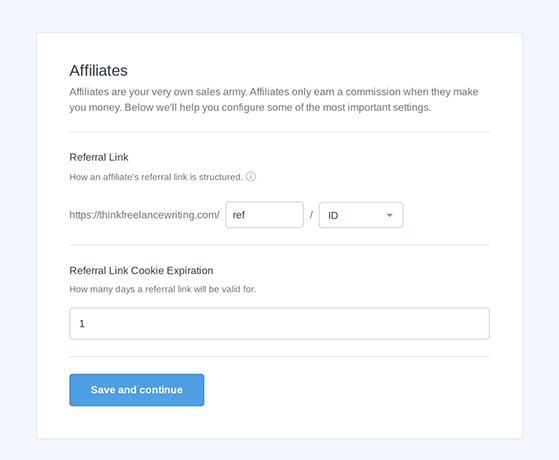
When you’re happy with your settings, click Save and Continue, then finally click the Finish Setup and Launch Wizard.
Once you’ve done that, your program will be ready for you to track links in your affiliate dashboard.
Step 3. Customize the Affiliate Area
Now that the setup wizard is complete, the plugin will automatically create an Affiliate Area in your WordPress dashboard. This area will adapt to your WordPress theme and branding, but you can also customize it easily.
You can use the page the plugin makes, or you can use your own page as your affiliate signup page. For example, you can create a custom signup page with a page builder like SeedProd and use that instead of the default AffiliateWP page.
All you need to do is create your custom page, then go to AffiliateWP » Settings and choose your custom page from the Affiliate Area dropdown menu.
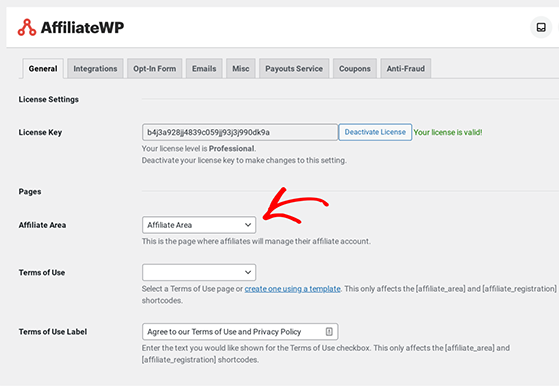
This is the page where users can sign up for your affiliate program and log into their account dashboard. So you may want to customize the signup form first.
You can do that by navigating to Pages » All Pages and selecting your signup page. If you’re using the AffiliateWP Affiliate Area page, it will already have an affiliate registration form.
However, if you’re making a custom signup page, you can add an affiliate form by typing “Affiliate” in your blocks search bar and selecting the Affiliate Registration block. This will embed the registration form template into your page.
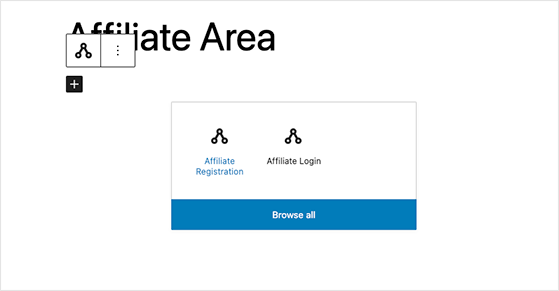
Now you can customize the form by:
- Adding and removing form fields
- Renaming your field labels
- Reordering the form fields
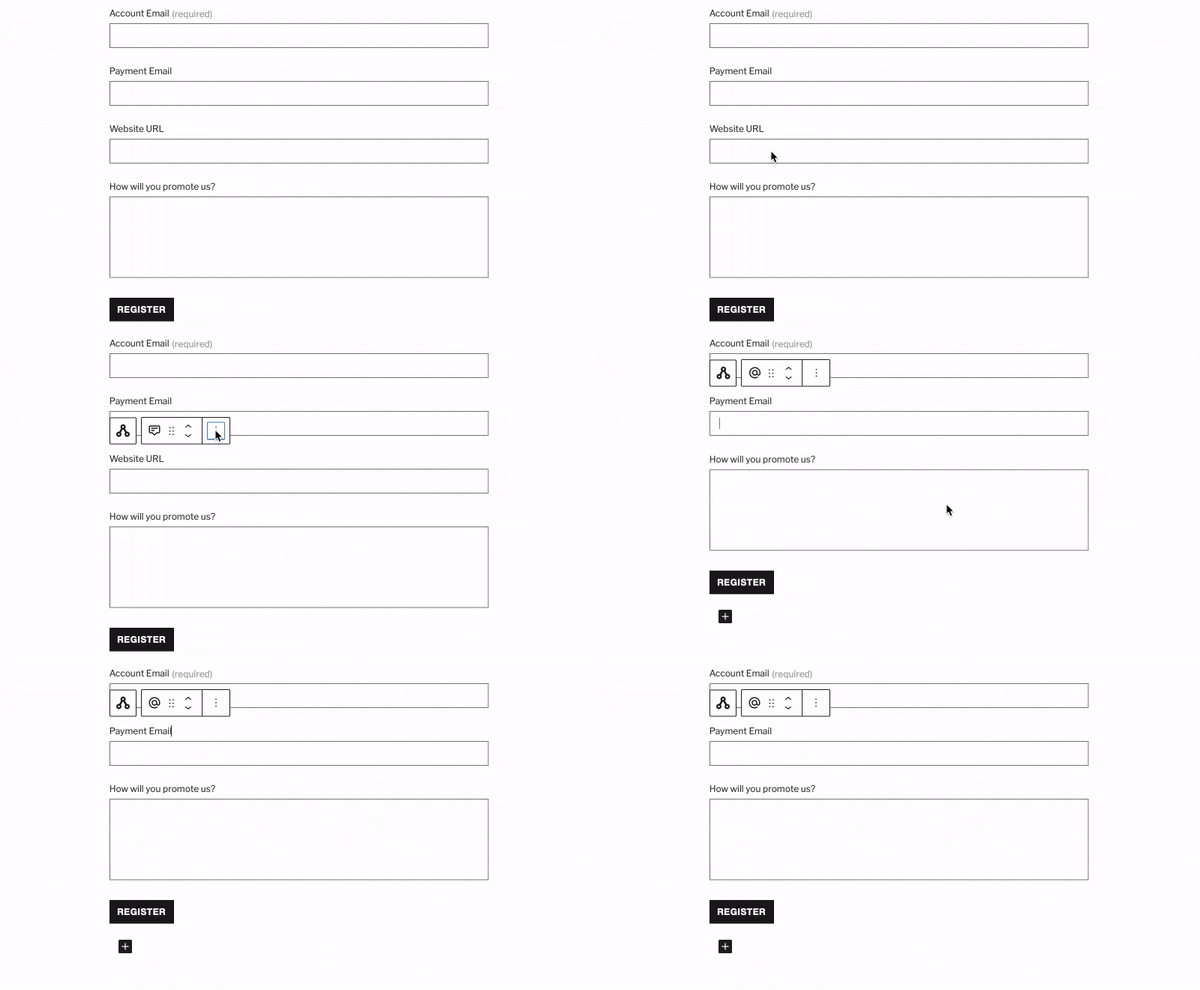
Remember to save the changes to your page before moving on.
After new affiliates have registered with your program, they can use the same page to log into their affiliate dashboards.
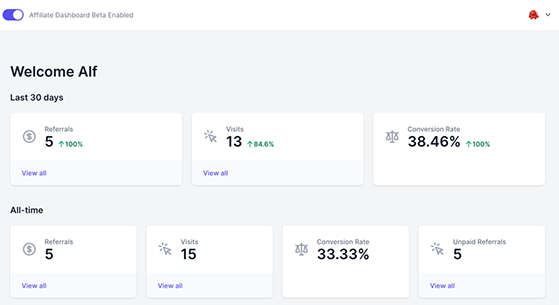
This is where they can generate affiliate links, find creatives, and track their affiliate commission rates, payouts, and other data.
Step 4. Approve New Affiliate Registrations
The default AffiliateWP settings require you to approve new registrations manually. While it may seem like extra work, it’s a good idea to leave these settings as they are.
We recommend this because only some people who sign up for your affiliate network will be the best fit for your business. By approving registrations yourself, you can prevent fraud and ensure the bloggers and marketers applying are relevant to your brand.
To accept or reject affiliate registrations, go to AffiliateWP » Affiliates and use the checkbox to confirm or deny applications.
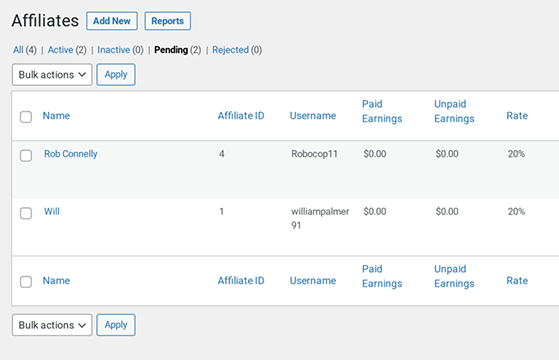
You’ll get an email notification whenever someone applies to your program, and similarly, potential affiliates will get an email if they were successful or not.
Step 5. Manage Your Affiliates
After approving affiliate partners, you can manage them easily from your Affiliates page. You’ll see information on earnings, referrals, visits, and more. But you can see even more affiliate management settings by clicking the affiliate’s name.
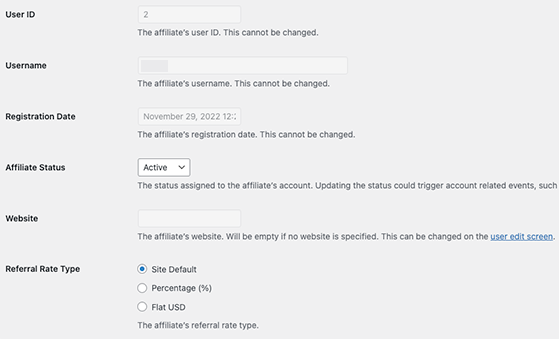
From there, you can manage your affiliate’s details, set up custom commission rates, add payment details, write personal notes, and more.
Step 6. Improve Your Program with Growth Tools
Besides letting you create an affiliate program easily, AffiliateWP has several powerful tools and add-ons. For example, you can create vanity coupon codes, affiliate landing pages, and stunning customizable affiliate portals.
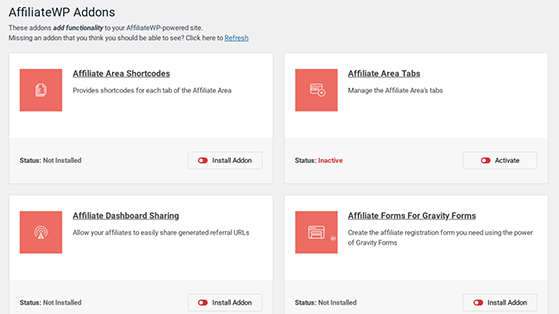
You can activate any of these add-ons by going to AffiliateWP » Add-ons. From there, toggle each add-on to activate them instantly.
Step 7. Set Up Affiliate Payments
The final step is to choose how you’ll pay your affiliates, and AffiliateWP offers 2 ways to do that.
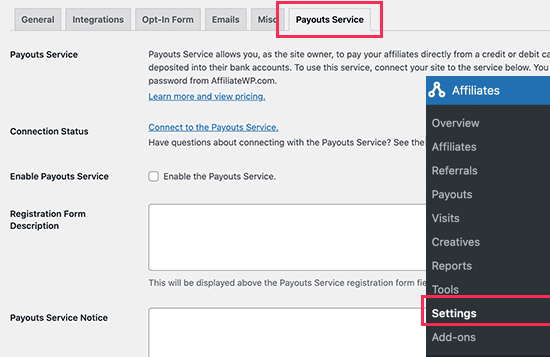
The first method is AffiliateWP’s Payout Services. It lets you send payments to your affiliates via AffiliateWP’s parent company, which uses Stripe to deposit payments directly into your affiliate’s debit card or bank account.
You can enable this functionality by heading to Affiliates » Settings and clicking the Payouts Service tab.
The second method is to use PayPal, which you can find as a separate add-on under the Professional AffiliateWP license.
If neither of these methods suits your business, you can pay your affiliates manually by visiting Affiliates » Referrals and clicking the Pay Affiliates button.
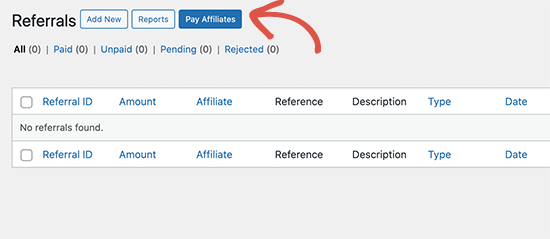
From there, you can choose a time and generate a payout list to pay your affiliates via PayPal, credit card, online banking, or any other payment method.
Note: AffiliateWP is our favorite way to create an affiliate program in WordPress. However, another solution we often recommend is to use the Easy Affiliate plugin. It’s one of the best WordPress affiliate plugins available, and they have a handy step-by-step tutorial on creating a WordPress affiliate program using their software.
Free: Download Our Giveaway Playbook
Templates, prize ideas, and promotion strategies in one guide.
How to Promote Your Affiliate Program
When your affiliate program is live, the next challenge is recruiting partners who will actually promote it. The quality of your affiliates matters more than the number. Here are tactics that work:
- Email your existing customers. They already trust your product. A short note explaining the program and commission rate is the fastest way to get your first affiliates. Then reward active partners by running affiliate giveaways. Affiliates earn more commission by sharing your giveaway, which grows your program and your sales at the same time.
- Create a dedicated Affiliates page on your site. Describe the program, commission rates, and how to apply. Link it from your footer so it is easy to find.
- Submit to affiliate directories. Sites like ShareASale, Impact, and PartnerStack attract affiliates who are actively looking for programs to join.
- Use social proof to show potential partners the results your program produces and build credibility.
For even more ideas, check out our guide on the best affiliate marketing ideas and tips to boost sales. If you work with influencers, our guide on running an influencer giveaway is worth a look too.
FAQs About Starting an Affiliate Program in WordPress
After following this guide to create an affiliate program in WordPress, you’ll have everything you need to grow your business. If you need more marketing tips, here are some more guides you’ll enjoy:
- Easy eCommerce Promotion Ideas to Boost Sales
- Lead Generation Ideas to Explode Your Business Growth
- Social Media Marketing Tools You Can’t Ignore
If you liked this article, please subscribe to our YouTube Channel for RafflePress video tutorials. You can also find us on Twitter and Facebook.

