13 Types of Contests to Grow Your Online Audience
 Stacey Corrin
Stacey Corrin
Stacey Corrin
 John Turner
John Turner
John Turner

Most people search for different types of contests because they want to grow their audience but aren’t sure which format actually works. Each contest type has its strengths. Some are great for email signups, some drive social followers, and others help you reach new people fast.
- Why Online Contests Work for Small Businesses
- Types of Contests for Audience Growth
- 1. Simple Sweepstakes
- 2. Refer-a-Friend Giveaway
- 3. Social Follow and Share Contest
- 4. Photo or Video Submission Contest
- 5. Caption Contest
- 6. Hashtag Contest
- 7. Quiz or Trivia Contest
- 8. Poll or Vote Contest
- 9. Milestone Giveaway
- 10. Seasonal or Holiday Contest
- 11. Partner or Co-Branded Contest
- 12. Pre-Launch Contest
- 13. Review or Testimonial Contest
- The Easiest Way to Run a Contest in WordPress
- FAQs About Types of Contests
Quick Summary: Online contests are promotional events where businesses incentivize users to perform specific actions—like subscribing or sharing—in exchange for a chance to win a prize. If you are a beginner, the three most effective types to start with are:
- Simple Sweepstakes: Best for fast email growth.
- Refer-a-Friend Giveaway: Best for viral reach.
- Photo Submission Contest: Best for user-generated content.
In this guide, I’ll walk you through the most popular contest formats that work well for small businesses and explain how each one helps you reach the right audience with less effort.
Why Online Contests Work for Small Businesses
Online contests work well for small businesses because they give people a clear reason to take action. When the reward feels simple and immediate, more people are willing to join your email list, follow you on social media, or share your content with friends.
The impact can be huge even on a small budget. In my analysis of market data, I found that OptinMonster’s Black Friday giveaway is the perfect case study. They used RafflePress to run a simple contest with bonus referral actions, and it created a viral loop that spread across their audience.
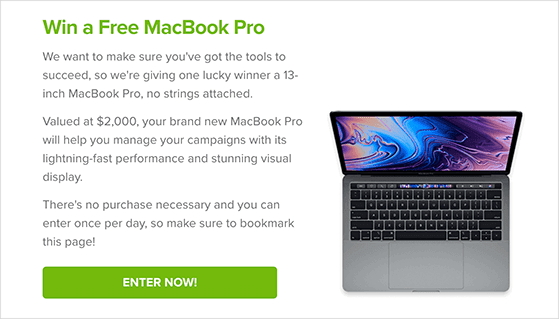
That single giveaway drove 24,372 entries, 3,500 new users, and a 3X increase in email list growth. It’s a good example of how the right contest format can reach far beyond your existing followers and bring new people to your business fast.
Contests also help you get attention without relying on paid ads. Referral entries, sharing tasks, and social actions all work together to bring in new visitors who might never have found you otherwise. That’s why so many small brands use giveaways when they want quick, focused growth without adding more tools to their marketing stack.
Types of Contests for Audience Growth
There are many ways to run a contest, and each format delivers a different kind of audience growth. To help you choose the right one, I’ve pulled together 13 contest types that are simple to run and easy for beginners to understand.
1. Simple Sweepstakes
A simple sweepstakes is the classic “enter to win” giveaway where people join with one quick action. It’s the easiest contest type for beginners and works well when you want broad engagement without extra steps.
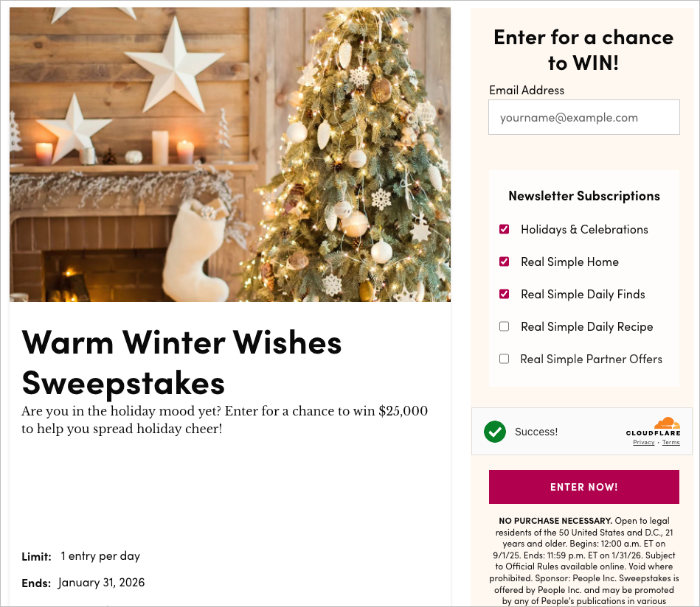
You can see a clear example of this on RealSimple. It runs a straightforward sweepstakes where users enter for a chance to win a cash prize by submitting their email address and subscribing to the newsletter.
How it works:
- People enter with a single action, usually joining your email list.
- You pick one winner at random at the end.
- You promote the sweepstakes on your site, email list, and social channels.
| Best For | Fast email list growth and high entry volume |
| Ideal Prize | A product bundle or audience-relevant digital download |
| Typical Duration | 7–14 days |
| Difficulty Level | Easy |
| Common Pitfall | Using a generic prize that attracts the wrong audience |
If you’re confused about what qualifies as a sweepstakes, this guide explains the difference between a sweepstakes, contest, and lottery.
2. Refer-a-Friend Giveaway
A refer-a-friend giveaway rewards people for sharing your contest with their friends. It’s one of the fastest ways to reach new audiences because every entrant helps spread the word with a single click.
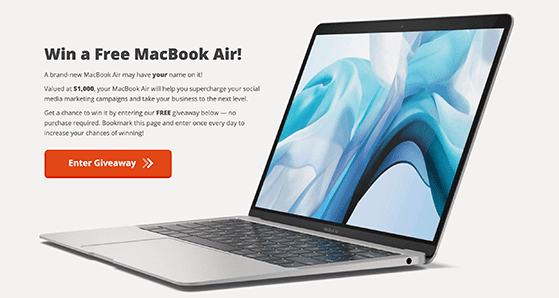
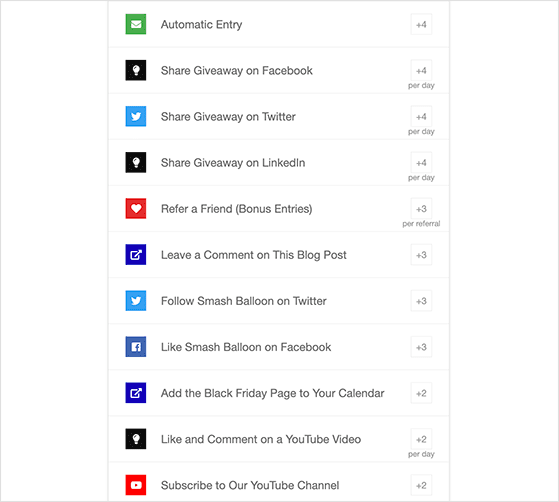
A strong example of this is the Smash Balloon Black Friday giveaway. By encouraging people to share the giveaway for extra entries, they generated 54,623 total entries and thousands of new subscribers in under four weeks.
How it works:
- People enter your giveaway, then share it with friends using built-in social buttons.
- They earn bonus entries each time they share, which boosts motivation and reach.
- The giveaway spreads naturally because sharing takes only a second.
| Best For | Reaching new audiences and encouraging viral sharing |
| Ideal Prize | A high-value or highly relevant item that people want to talk about |
| Typical Duration | 10–14 days |
| Difficulty Level | Easy |
| Common Pitfall | Not offering enough bonus entries to motivate people to share |
If you want step-by-step help getting started with this type of contest, see our guide on how to run a refer-a-friend giveaway.
3. Social Follow and Share Contest
A social follow and share contest encourages people to follow your brand on platforms like Instagram, Facebook, or X. It works well when you want quick visibility and a burst of engagement across multiple social media networks.
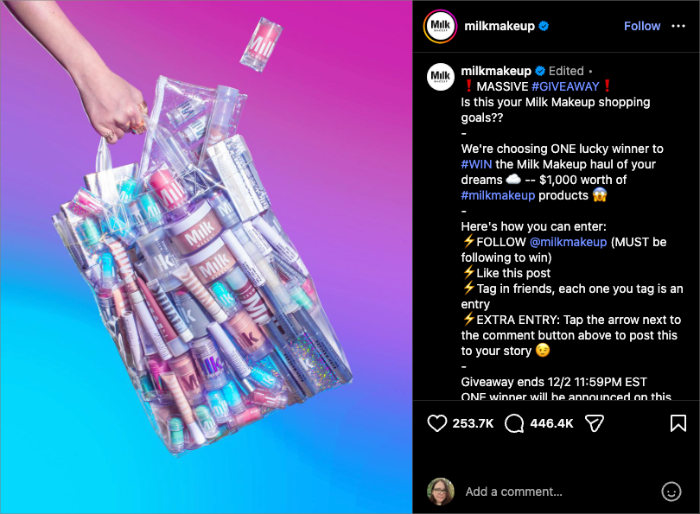
A clear example of this is Milk Makeup’s Instagram giveaway. They asked users to follow their account, like the post, tag friends, and share it for extra visibility, which helped the contest spread quickly across the platform.
How it works:
- You ask people to follow your social accounts to enter the contest.
- They earn extra entries when they share the giveaway post with their own followers.
- The contest spreads quickly because each share attracts new people into the promotion.
| Best For | Growing social media followers and boosting visibility |
| Ideal Prize | A product or bundle that your social audience already engages with |
| Typical Duration | 5–10 days |
| Difficulty Level | Easy |
| Common Pitfall | Relying on a single platform instead of sharing across multiple channels |
If you’re new to this format, see our guide on social media contest ideas for more inspiration.
4. Photo or Video Submission Contest
A photo or video submission contest invites people to create content around a specific theme. It’s a great format when you want user-generated content you can reuse for social proof, brand storytelling, or community engagement.
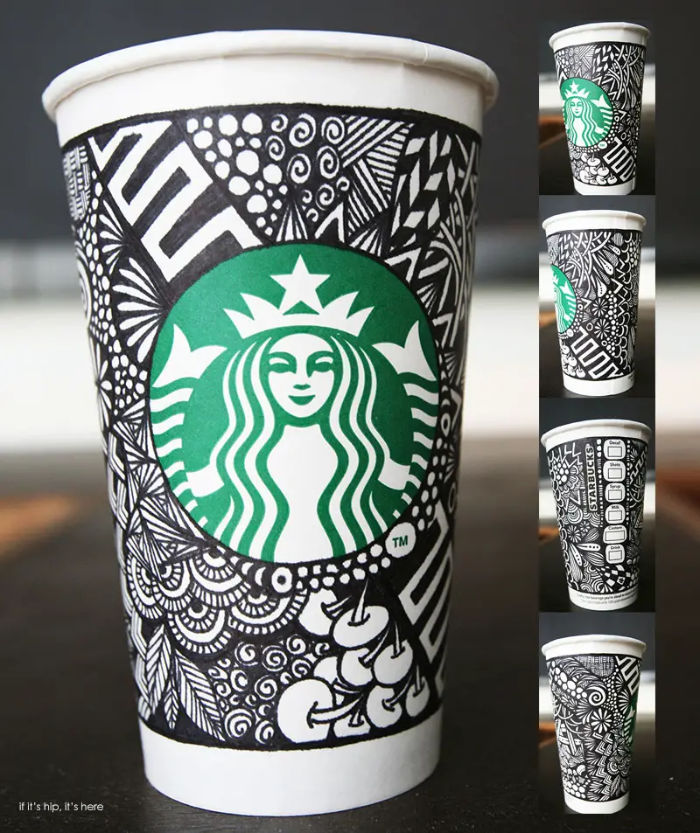
A clear example of this is Starbucks’ White Cup Contest, where customers decorated plain Starbucks cups and submitted photos of their designs. The contest generated over 4,000 entries in three weeks and helped Starbucks showcase customer creativity while boosting brand loyalty.
How it works:
- You set a theme and ask people to upload a photo or short video based on your prompt.
- Participants share their submissions on social media, which helps your contest reach new audiences.
- You choose a winner, then feature the top submissions to build trust and engagement.
| Best For | Generating user content, increasing engagement, and building community |
| Ideal Prize | A themed product, bundle, or feature opportunity related to your brand |
| Typical Duration | 10–21 days |
| Difficulty Level | Medium |
| Common Pitfall | Unclear rules or themes, which reduce the quality of submissions |
For step-by-step help, see our guide on how to run a photo contest.
5. Caption Contest
A caption contest asks people to submit a funny or creative caption for an image you provide. It’s an easy way to get engagement because participants only need to write a short line instead of creating a full photo or video.
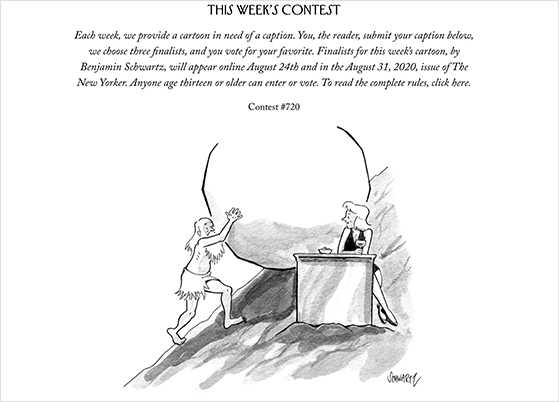
A well-known example is The New Yorker Caption Contest, where readers submit captions for a weekly cartoon. The contest attracts thousands of entries and shows how a simple image can spark conversation and community engagement.
How it works:
- You upload a cartoon, photo, or product image and ask people to write a caption for it.
- Participants can vote on their favorite entries, or you can pick a winner yourself.
- You share the winning caption to encourage more participation next time.
| Best For | Boosting engagement and encouraging creativity |
| Ideal Prize | A small gift card, feature, or product sample |
| Typical Duration | 5–7 days |
| Difficulty Level | Easy |
| Common Pitfall | Using an image that’s too vague or confusing, which reduces entries |
If you want more inspiration, see our guide on caption contest examples.
6. Hashtag Contest
A hashtag contest asks people to post content on social media using a specific hashtag to enter. It works well when you want visibility on platforms like Instagram, X, or TikTok, because every entry helps spread your branded hashtag.
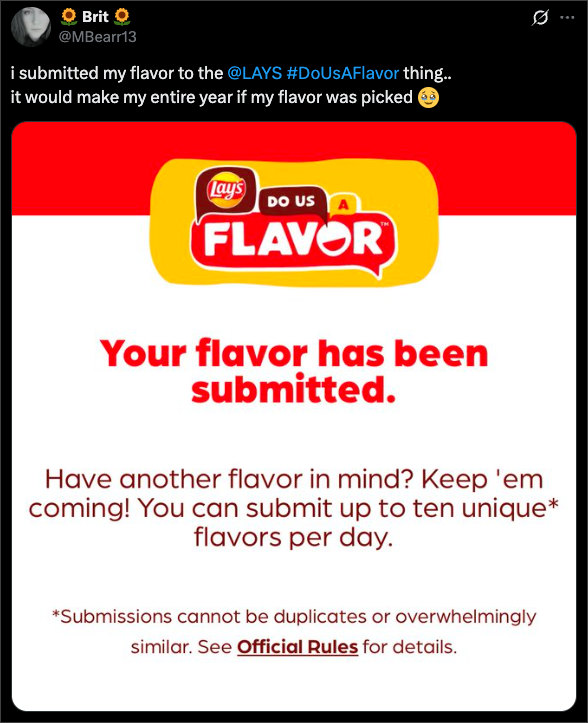
A strong example is Lay’s Do Us a Flavor competition, where fans submitted new chip flavor ideas and promoted them using the campaign hashtag. The contest received over 700,000 submissions, and the winning flavor earned a $1 million prize.
How it works:
- You choose a unique hashtag and tell participants to post their entry using that hashtag.
- People share photos, videos, or ideas publicly, which gives your contest natural reach.
- You review the hashtag feed to pick a winner or shortlist finalists.
| Best For | Boosting social visibility and collecting public entries |
| Ideal Prize | A high-value item or experience that encourages sharing |
| Typical Duration | 7–14 days |
| Difficulty Level | Medium |
| Common Pitfall | Using a hashtag that already exists or is too broad |
For a step-by-step walkthrough, see our guide on how to run a hashtag contest.
7. Quiz or Trivia Contest
A quiz or trivia contest asks people to answer questions to win a prize. It works well when you want deeper participation because users stay engaged for longer than a simple entry action.
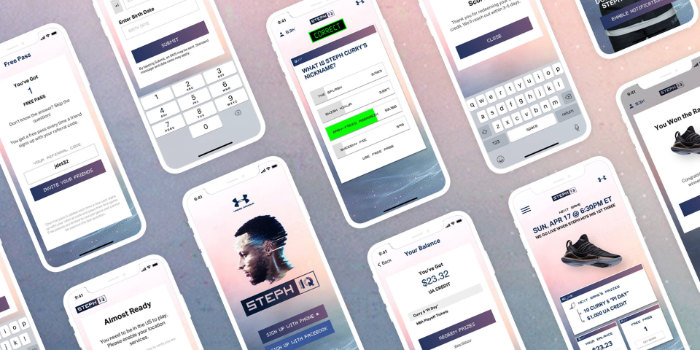
A strong example is Under Armour’s Steph IQ game, a real-time trivia contest triggered during Steph Curry’s playoff performances. Fans answered rapid-fire questions about Curry and the NBA for a chance to win Curry5 sneakers, playoff tickets, and cash prizes, keeping users engaged for an average of 40 minutes.
How it works:
- You create a set of themed questions and challenge users to answer them correctly.
- The contest can run live or on-demand, depending on the tools you use.
- You award prizes to top scorers or to randomly selected participants who complete the quiz.
| Best For | High engagement and keeping users on your page for longer sessions |
| Ideal Prize | A themed prize tied to the trivia topic, such as merch or exclusive access |
| Typical Duration | Short, timed sessions or 3–7 day open entry |
| Difficulty Level | Medium |
| Common Pitfall | Making the questions too difficult, which discourages participation |
8. Poll or Vote Contest
A poll or vote contest asks people to choose their favorite option from a shortlist. It works well when you want quick interaction because users only need to click once to enter.
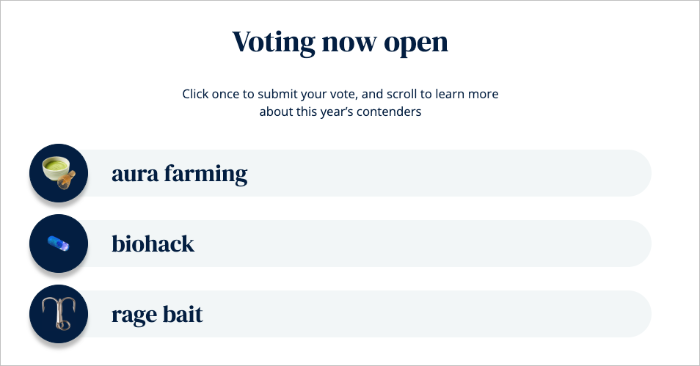
A clear example is the Oxford University Press Word of the Year public vote, where people select their preferred word from a shortlist of trending expressions. Users can click once to vote and scroll to learn more about each contender, making it a simple and engaging format.
How it works:
- You present a shortlist of options, such as words, designs, photos, or entries.
- Users vote for their favorite with a single click.
- The option with the most votes wins, or you select a random winner from all voters.
| Best For | Fast engagement and understanding audience preferences |
| Ideal Prize | A small reward such as a gift card, feature, or product bundle |
| Typical Duration | 3–7 days |
| Difficulty Level | Easy |
| Common Pitfall | Not presenting the options clearly, which reduces participation |
For step-by-step help, see our guide on how to create a poll in WordPress.
9. Milestone Giveaway
A milestone giveaway celebrates something important for your business, such as an anniversary, product launch, or follower milestone. It works well because people enjoy joining celebrations and sharing them with others.
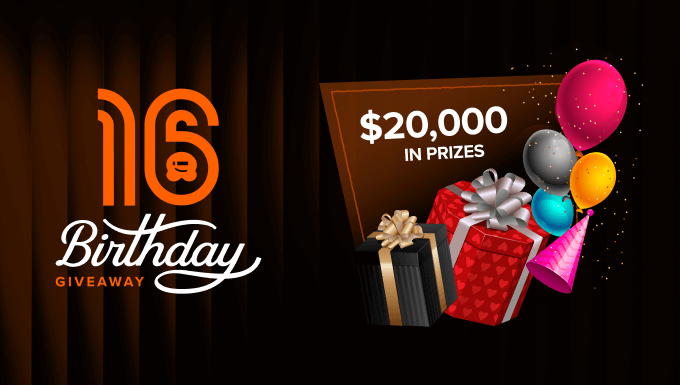
A strong example is the WPBeginner 16th Birthday Giveaway, which offered over $20,000 in prizes to celebrate the site’s anniversary. The giveaway received over 9,035 entries and selected 87 winners, showing how effective milestone celebrations can be for driving participation and community engagement.
How it works:
- You choose a meaningful milestone such as an anniversary, follower goal, or product launch.
- You celebrate the moment by offering a prize and inviting your audience to enter.
- You promote the giveaway across email, social media, and your website to maximize entries.
| Best For | Boosting awareness and strengthening community loyalty |
| Ideal Prize | A bundle, exclusive discount, or product pack tied to your milestone |
| Typical Duration | 5–10 days |
| Difficulty Level | Easy |
| Common Pitfall | Choosing a milestone that your audience doesn’t relate to |
10. Seasonal or Holiday Contest
A seasonal or holiday contest runs during a specific time of year, such as Thanksgiving, Christmas, or Valentine’s Day. It works well because people are already in a festive mindset and more open to joining giveaways.
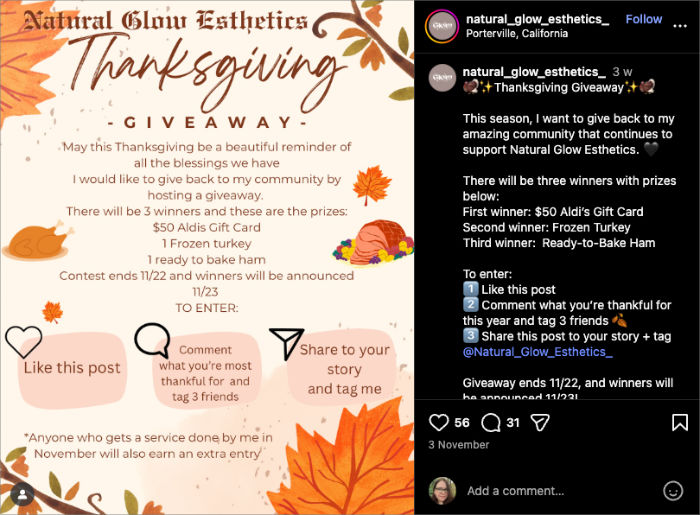
A clear example is this Thanksgiving giveaway from Natural Glow Esthetics, which offered prizes like a $50 Aldi gift card, a frozen turkey, and a ready-to-bake ham. Entrants liked the post, commented what they were thankful for, tagged friends, and shared it to their stories, which helped the contest spread through the local community.
How it works:
- You choose a holiday and offer a themed prize, such as a gift card or seasonal item.
- You run the giveaway during the event window to tap into higher engagement.
- You ask entrants to follow simple steps like liking, commenting, or sharing the post.
| Best For | Boosting engagement during busy holiday seasons |
| Ideal Prize | Seasonal bundles, holiday meals, or themed gift cards |
| Typical Duration | 3–7 days |
| Difficulty Level | Easy |
| Common Pitfall | Launching too close to the holiday, which limits reach |
For more inspiration, see these popular Thanksgiving giveaway ideas.
11. Partner or Co-Branded Contest
A partner or co-branded contest is a giveaway you run with another business that shares your audience. It works well because both brands promote the contest, which brings in more entrants and increases visibility for everyone involved.
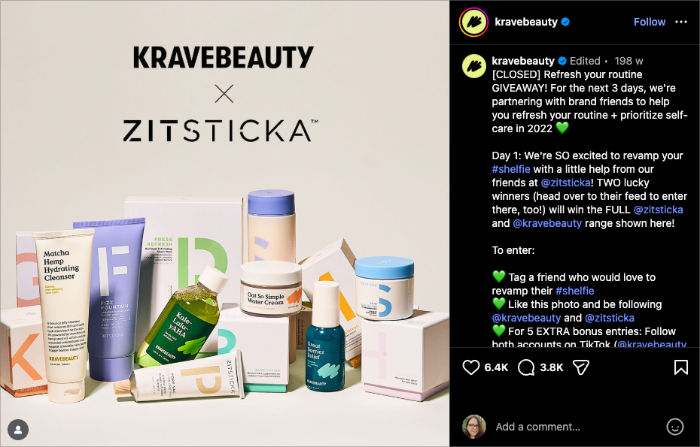
A clear example is this co-branded giveaway from KraveBeauty and ZitSticka, where both brands teamed up to offer their full product ranges to two winners. Entrants tagged a friend, followed both accounts, and could earn bonus entries by following the brands on TikTok, which gave the giveaway extra reach across multiple platforms.
How it works:
- You partner with a brand that serves a similar audience but doesn’t directly compete with you.
- You combine prizes from both brands and promote the giveaway across your channels.
- You ask entrants to follow both accounts or complete shared actions, helping each brand grow.
| Best For | Reaching new audiences through a trusted partner |
| Ideal Prize | A bundle featuring products from both brands |
| Typical Duration | 5–7 days |
| Difficulty Level | Medium |
| Common Pitfall | Partnering with a brand that doesn’t share your audience |
If you want help planning a joint giveaway, see our guide on how to plan a brand giveaway collaboration.
12. Pre-Launch Contest
A pre-launch contest helps you build an audience before a new product or business goes live. It works well because people are excited to join early and earn rewards before anyone else.
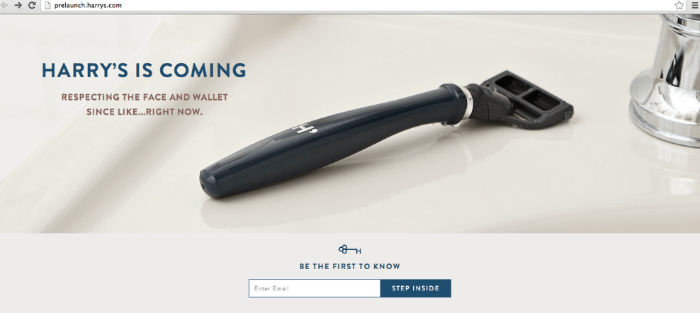
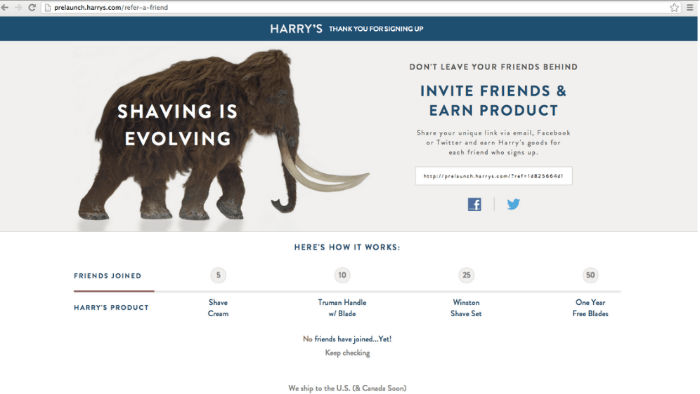
A well-known example is the pre-launch campaign from Harry’s Razors, where users referred friends to earn guaranteed rewards instead of entering a random draw. The milestone system removed the “I probably won’t win” barrier and helped Harry’s collect over 100,000 email signups in one week.
How it works:
- You set up a landing page explaining your upcoming launch and the rewards people can earn.
- You offer guaranteed prizes or bonuses for reaching referral milestones.
- You grow your email list and build excitement before launch day.
| Best For | Building a large email list before launching a new product |
| Ideal Prize | Tiered rewards users can unlock by referring friends |
| Typical Duration | 1–3 weeks |
| Difficulty Level | Medium |
| Common Pitfall | Offering rewards that are too small to motivate sharing |
For a full guide, see our walkthrough on how to pre-launch a product with viral giveaways.
13. Review or Testimonial Contest
A review or testimonial contest encourages customers to share honest feedback directly on your website. It works well because genuine testimonials help build trust and give future buyers confidence in your brand.
It is vital to note that platforms like Google and Amazon strictly prohibit incentivizing direct reviews. However, the method described here offers a chance to win a prize for the action of leaving feedback on your own site, rather than a guaranteed reward for a positive rating on a third-party platform.
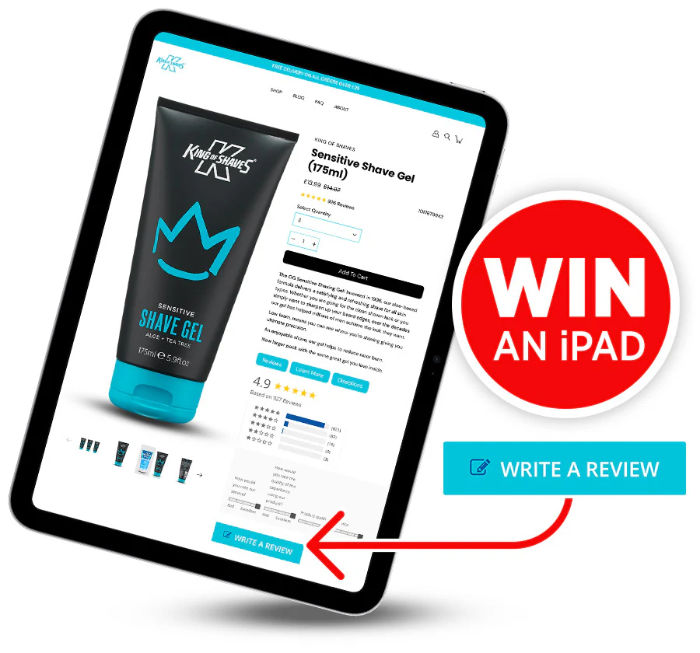
A clear example is the King of Shaves Review Giveaway, where customers could win an iPad by submitting a genuine product review. Every valid review was entered into a free prize draw, which helped the brand collect more customer feedback while rewarding its community.
How it works:
- You ask customers to leave a genuine review or testimonial on your website.
- Each submitted review becomes an entry into a free prize draw.
- You pick a winner at random and highlight some of the best reviews.
| Best For | Collecting customer feedback and building trust |
| Ideal Prize | A high-value product or device your audience will want |
| Typical Duration | 2–4 weeks |
| Difficulty Level | Easy |
| Common Pitfall | Not verifying that reviews are genuine before counting entries |
If you want to run this format on your site, see our guide on how to do a review giveaway in WordPress.
Free: Download Our Giveaway Playbook
Templates, prize ideas, and promotion strategies in one guide.
The Easiest Way to Run a Contest in WordPress
The easiest way to run a contest in WordPress is to use a plugin that handles entries, tracking, and winner selection for you. RafflePress does this in a few clicks, so you can launch any of the contest types above without extra tools.
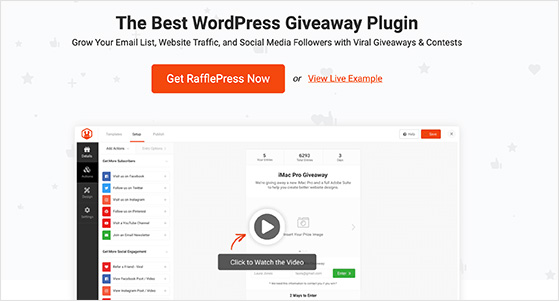
RafflePress includes templates for the most popular contest formats, and you can add your prize and entry actions in minutes. The giveaway widget publishes anywhere on your site with no coding needed.
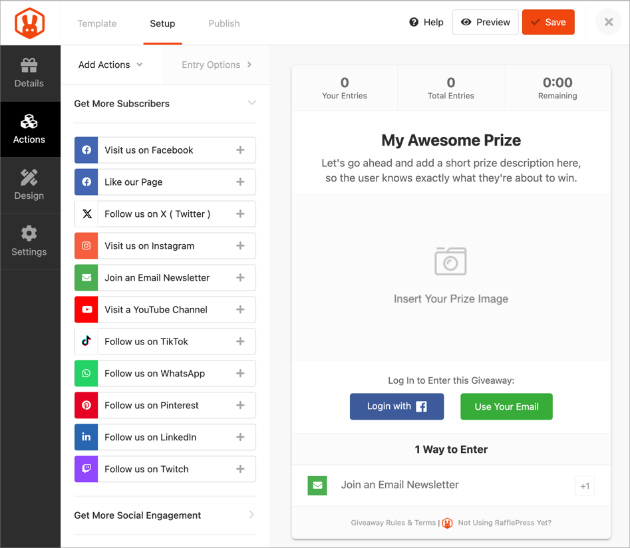
The plugin tracks every entry automatically and lets you pick a winner with its built-in random winner tool. You never need spreadsheets or manual checks.
RafflePress also connects with email providers, social platforms, and analytics tools. This makes it easy to grow your audience and measure your results in one place.
If you’re new to contests, follow our full guide on how to create an online contest. It shows you how to plan, promote, and run a successful giveaway from start to finish.
FAQs About Types of Contests
If you want to test one of these contest ideas, start small and run a simple giveaway on your site. It’s the quickest way to see what your audience enjoys.
RafflePress makes the setup easy because you can choose a template, add your prize, and publish your giveaway in minutes. You don’t need any technical experience to get everything running.
If you need more help, you can follow our tutorials to plan and promote your first contest:
- How to Set Goals for Your Next Giveaway
- How to Write Giveaway Rules Like a Pro
- How to Use Good Giveaway Copywriting to Drive Entries
- How to Create a Distraction-Free Giveaway Landing Page
- Super-Effective Contest Promotion Ideas
If you liked this article, please subscribe to our YouTube Channel for RafflePress video tutorials. You can also find us on Twitter and Facebook.

